
This Creme Mousseline (Mousseline Cream) recipe is the very last installment of my custard recipe series! Mousseline cream is a delicious and rich cream that is made with thick pastry cream, lightened with whipped butter. Here, you’ll learn how to make this rich and creamy filling that can be used in so many different ways!
Pastry cream + whipped butter make this delectable creme mousseline. Fantastic as a filling for pastries such as Paris-Brest , cakes and cupcakes , or even pies and tarts .

Why I love this recipe
- Mousseline cream is a delicious, buttery, smooth, and silky cream that is so versatile!
- This recipe breaks down how to make classic creme mousseline in an easy to follow way to ensure perfect results .
- I include tips on how to make the custard perfectly AND how to get the best flavor in your mousseline cream.
- Other flavor additions are also included so that you can adapt the recipe to your taste.
- I explain the difference between German buttercream and creme mousseline, and how to make the classic recipe.
Quick recap
I’ve previously shared a comprehensive guide on all the types of custard and the different variations that you can make with custard. Mousseline cream is one of the recipes that derives from pastry cream , and you add butter to lighten and stabilize the cream. Related “cousins” of mousseline cream include diplomat cream and chiboust cream.
In my article for types of custard, I covered the two main types of custard and the variations of custard that you can make with them.
- Pastry Cream – Creme Patissiere, the thick custard. Creme Diplomat (with gelatin and whipped cream) Creme Chiboust (gelatin and meringue) Creme Mousseline (butter and flavoring)
- Pouring Cream – Creme Anglaise, the thin custard. Creme Bavarois (gelatin and whipped cream) Cremeux (chocolate, butter, gelatin, and fruit puree)
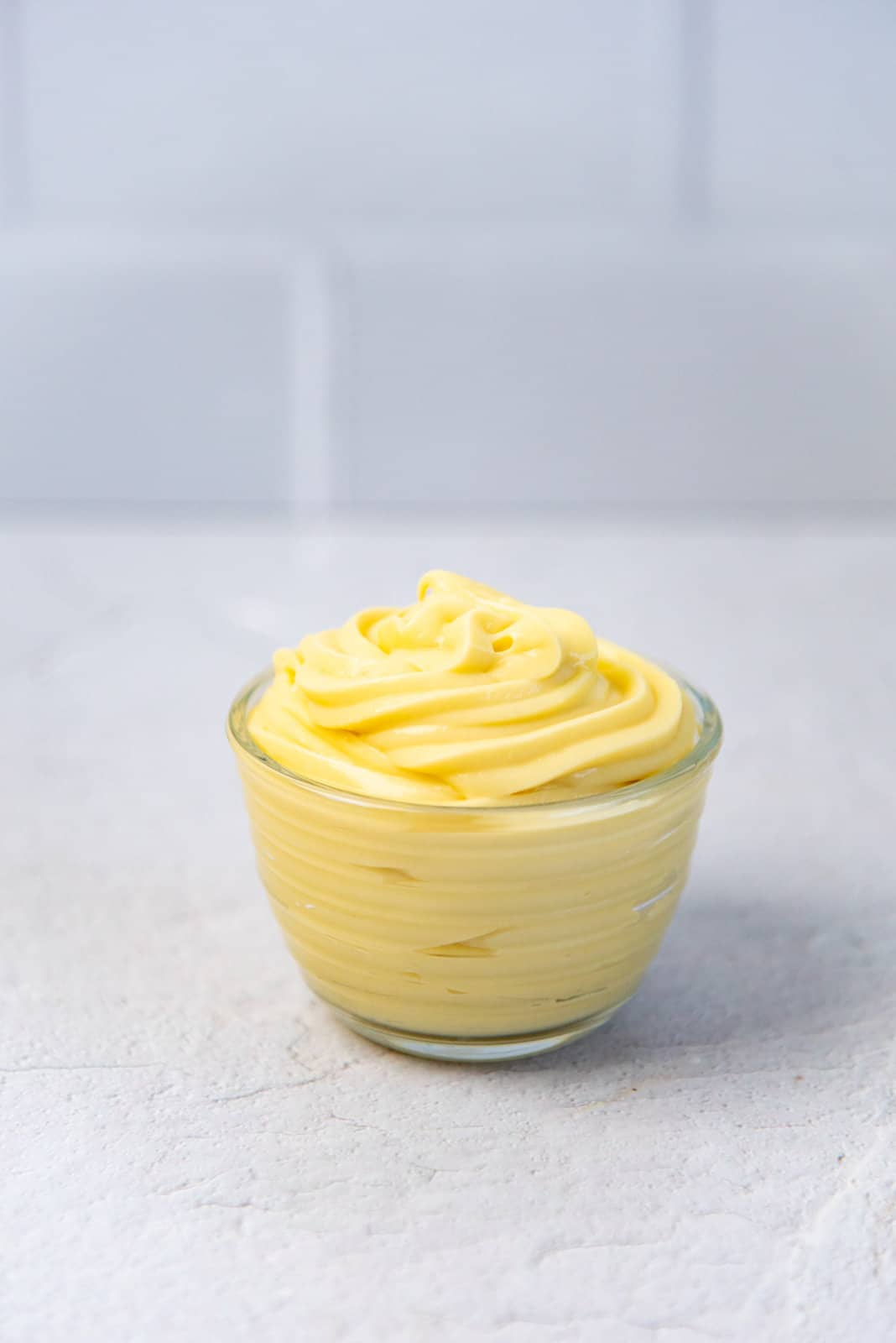
Pastry Cream / Creme Patissiere
What is creme mousseline?
The base for mousseline cream is the thick custard, i.e. creme patissiere (or pastry cream). This pastry cream is made with milk, egg yolks, sugar, and cornstarch, and cooked until thickened. I prefer to make this custard a little thick so that it already has a stable base. Once the pastry cream is cooled down, softened butter is whipped until smooth, creamy, and a little airy. Then you add the pastry cream to the butter mixture while whipping to get a beautifully smooth, creamy paste.
You can also very easily add other flavorings such as chocolate, coffee, liqueurs, nut pastes (praline), and fruits. My absolute favorite is mousseline that is flavored with praline paste !
This cream is the classic (and the most perfect) filling for one my favorite pastries – Paris Brest , which makes sense because of its French origins.
This recipe is not difficult to make. It may seem daunting, but it’s essentially pastry cream mixed with whipped butter. So don’t be intimidated, and give it a go! I’ll break down the steps and the variations, PLUS how to use it.

Mousseline cream vs German buttercream
Mousseline and German buttercream are VERY similar. Honestly, they can be swapped for each other in a pinch. But there are some small differences.
Mousseline uses less butter. The recipe for mousseline cream usually uses 1 part of butter for every 2 parts of custard.
However, German buttercream uses more butter for a more buttery texture . Since this is a buttercream that is used on cakes, it makes sense that German buttercream has a more buttery feel.
Mousseline also has a more creamy and dense texture than German buttercream, whereas the buttercream should be more airy. This is because you don’t have to whip the butter as much for mousseline cream, as you would for German buttercream. Some people add half of the butter into the custard and then whisk the other half until it’s creamy and then add the pastry cream into it to make the mousseline cream. Which results in a cream that has a very silky, creamy mouthfeel but isn’t light and fluffy like a buttercream!
There is another version of mousseline cream that is made in Italy. However, Italian mousseline cream is essentially a version of diplomat cream (pastry cream mixed with whipped cream).
How to make mousseline cream
Ingredients
There are two parts to this recipe – the pastry cream and the whipped butter.
The pastry cream
- Milk
- Sugar
- Egg yolks
- Vanilla and salt (flavoring)
- Cornstarch
- Butter
Whipped butter
- More butter
- Praline paste (optional)

Step by step recipe overview
Making the pastry cream
The first step is to make the pastry cream. Here I will follow the method where I add half the butter into the pastry cream and whip the other half in a mixer during the second stage. You could choose to add all the butter during the second stage if you like, but I prefer my mousseline to have a slightly more dense, silky mouthfeel. You can also read up on all these incredible tips on how to make perfect pastry cream without any curdling in my post for pastry cream.
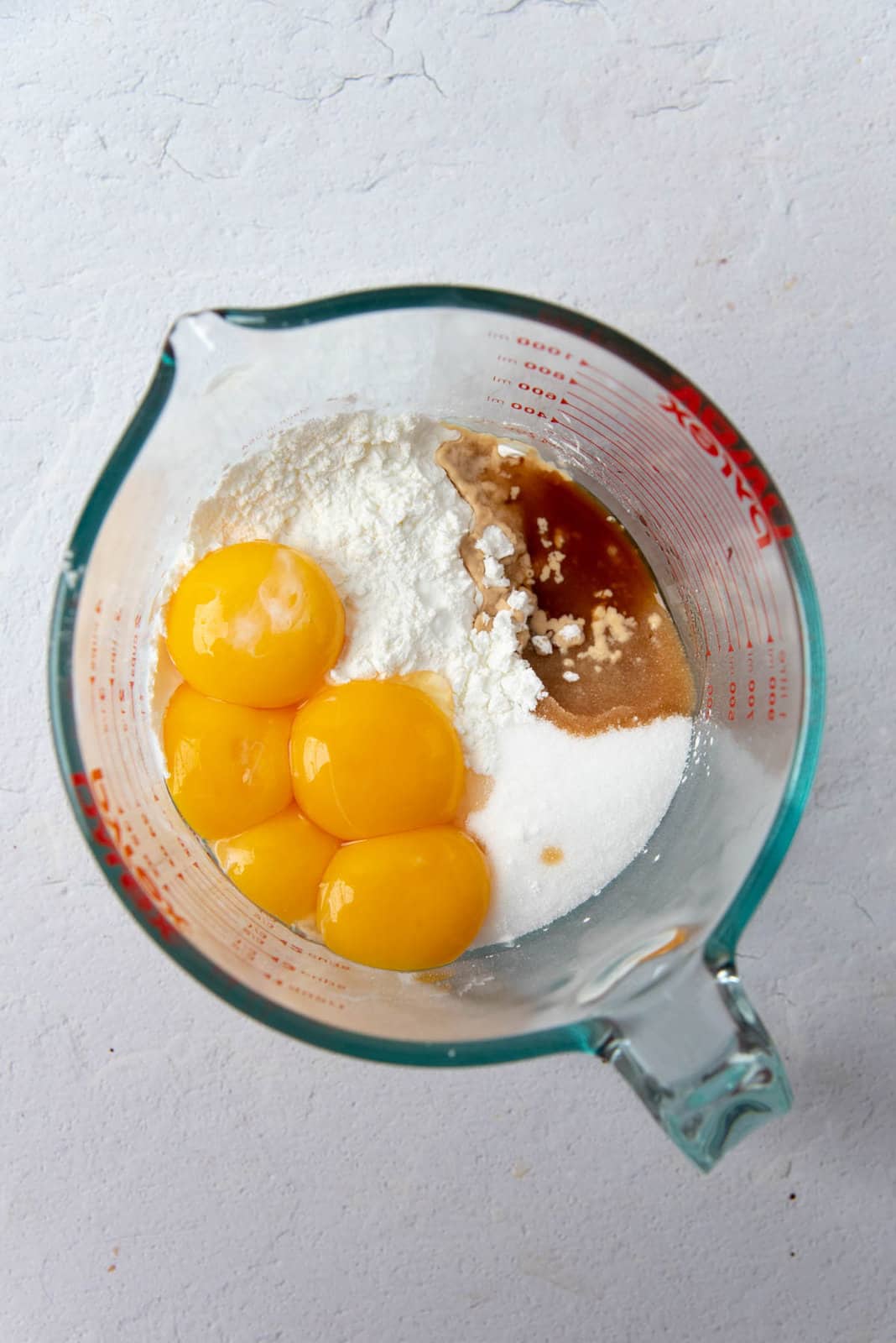
The first step is to heat the milk. While the milk is heating, whisk the egg yolks, sugar, cornstarch, salt, and vanilla in a bowl, until you have a smooth paste that is a little paler in color. It’s important that there are no egg yolk bits stuck on the side or bottom of the bowl as this will form “scrambled eggs” if not properly incorporated.
After you heat the milk, add the milk in a thin, slow stream into the egg mixture while constantly whisking the eggs. Add about 1 cup of the milk mixture into the egg yolks to bring up the temperature of the egg mix closer to that of the hot milk. This process is called “tempering the eggs”.
Add the egg milk mixture back into the pot with the rest of the hot milk and heat it over medium (or medium high if you’re familiar with making custard) while whisking almost constantly. Make sure to scrape the sides, corners, and the bottom of the pot as you’re cooking the custard to prevent egg from “setting”. This is important for a smooth, lump-free custard that will make a silky, creamy mousseline cream.
The custard should start to thicken, but keep cooking it until it starts to boil. Big bubbles will start to break the surface of the thickened custard making a “bloop” sound. When one or two of these bubbles appear, then you know the custard has started to boil.
Now vigorously whisk the custard while cooking for at least another minute. This is crucial to make sure that all the cornstarch in the custard also reaches the same temperature and is activated. Otherwise the custard won’t be as thick as it should be.
Next, remove the custard from the heat and whisk in the butter. Mix until all the butter melts and incorporates. Pass the custard through a sieve into a bowl, and cover the whole surface with plastic wrap and let it cool down, and then chill in the fridge until cold (or overnight is better too).

Making the mousseline cream
When the pastry cream is cold or has been chilled overnight, you’re ready to make perfect mousseline cream!
The first step is to ensure that you have unsalted butter that is softened to room temperature. You can use salted butter too, but then adjust the salt in the recipe so that you don’t end up with an overly salty mousseline cream.
For a classic French creme mousseline you can add some praline paste. This is optional, but it’s so delicious and I highly recommend it! You can make your own, or you can buy praline paste from baking and food specialty stores.

Homemade praline paste
Place the butter and praline cream in a large mixing bowl and use a whisk to whip the butter until it’s light and creamy. It doesn’t have to be very airy (like with buttercream), but it needs to be very creamy and lighter in color. However, if the butter is light and airy, that’s OK too!
When the butter is ready, you’re ready to add the pastry cream.
Remove the custard from the fridge. Switch the whisk attachment with a paddle attachment in your stand mixer. While the mixer in on medium speed, add the custard into the butter mixture – one spoonful at a time. This will ensure that the custard mixes in well.
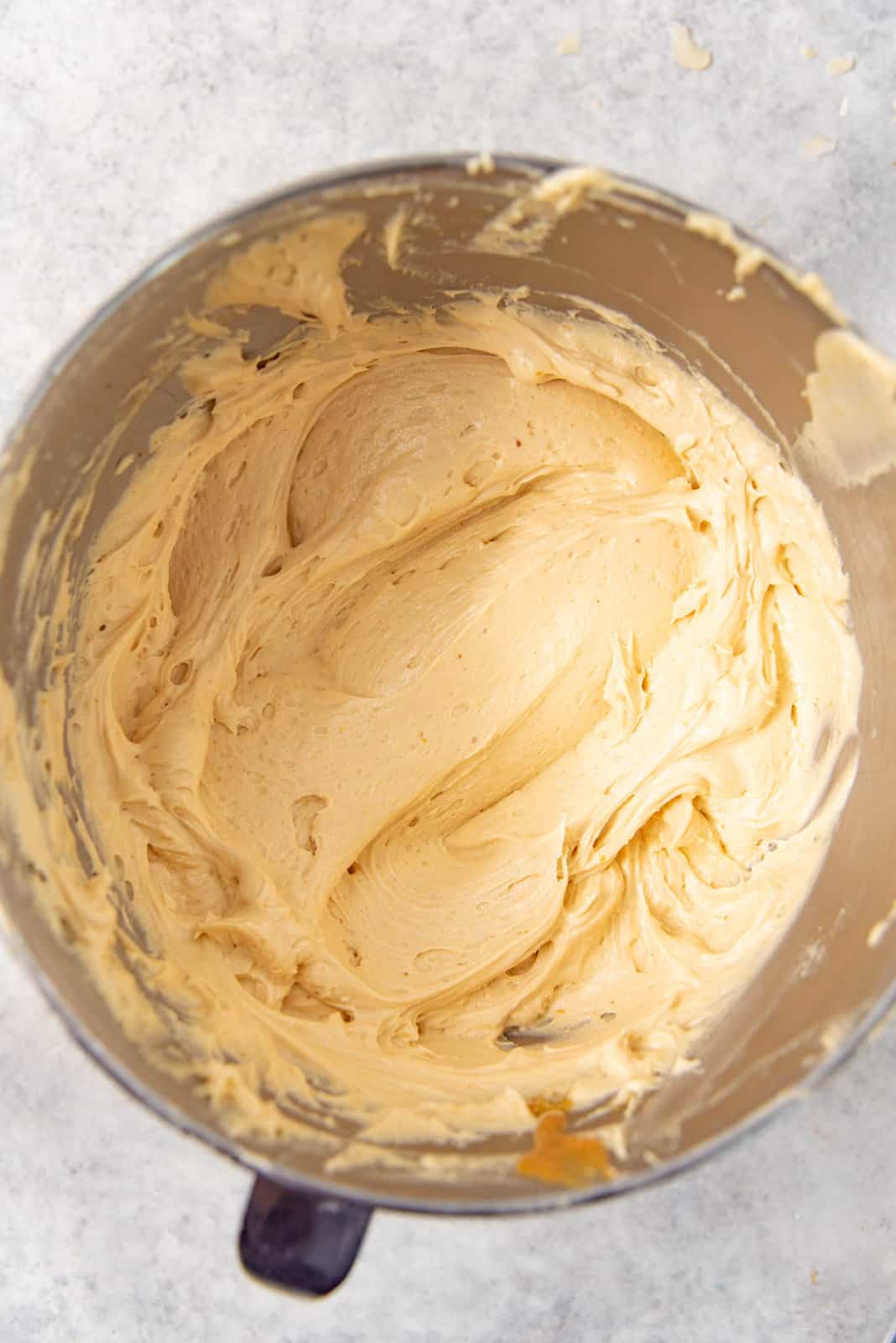
After you add all the custard, you can increase the speed of the mixer to whip the cream until it’s nice and smooth. Make sure that the sides and bottom of the bowl are periodically scraped down as well.
The colder the butter and custard, the more air will be whipped into the mousseline cream. This will result in a more airy, fluffy mousseline cream.
To get a more dense, creamier mousseline cream, make sure that the pastry cream and the butter are both at room temperature (around 70 F).
Your creme mousseline is now ready to be used!

Troubleshooting tips
Whether you make this mousseline cream soft and fluffy as buttercream OR dense and creamy like a creamy filling, it’ll be delicious either way! It does not affect the flavor at all. So you do NOT have to fix or change anything. However, if you do have a preference, here’s how to make sure you get the texture you like.
I prefer an airy and fluffy mousseline cream. What should I do to achieve this?
Make sure the butter is at around 68 – 70 F (i.e. average room temperature, not warm or too cold). You can also use your custard straight from the fridge. The cooler components will create a fluffier texture when you whisk them. And rather than switching to a paddle attachment, you can continue to mix the two components with a whisk attachment to add more air.
How can I get a mousseline cream that is more creamy and dense?
This is how I prefer my mousseline cream. To achieve this, make sure your butter is very soft, so that it’s easier to cream without adding air. Around 72 – 75 F temperature. Allow your pastry cream to come to room temperature before adding it to the butter as well. Rather than using a whisk, you can use a spatula or a paddle attachment to make the butter creamy without adding any air. Add the room temperature custard in spoonfuls, while making sure there are no lumps in the mixture. Using a paddle attachment OR mixing it manually will reduce the amount of incorporated air. If you do want to add a little air, just whisk with a whisk attachment for a few minutes.
My cream is too soft and melty. What do I do?
In summer, or if your kitchen is very warm, the creme mousseline might get too soft because of the butter content. Cover the mixing bowl and place it in the fridge until the cream cools down and becomes a little firm. Then remove it from the fridge and mix it with a spatula (or low speed on your mixer with a paddle attachment). This should fix it as the butter will become firm once it cools down a little.
Creme mousseline became too fluffy and is too much like buttercream. How do I fix this?
This happens when you whip the mixture while the ingredients are on the cooler side. This happens to me ALL the time when I make creme mousseline in winter, OR if I mix the custard straight from the fridge. Here’s how I fix it – I fill a large bowl (or a clean sink) with some hot water from the tap. Then I place the mixing bowl (with the airy cream) in the hot water and mix it with a spatula for a few seconds. You can alternate moving the bowl in and out of the hot water so that the contents don’t melt too fast. As some of the cream melts and is incorporated into the mousseline cream, the air will be removed and the mixture will deflate. You have to do this process carefully, so that you don’t melt the creme mousseline too much and make it too soft and runny. If you do melt it too much, see the previous question above for the answer!
How to store mousseline cream
As with all custard based recipes, mousseline cream should be used within 4 days for the best flavor. The more you handle it, and keep it room temperature, the shorter its shelf-life will be. This will also depend on how fresh the ingredients are. So, as with all recipes, use your discretion to make sure the mousseline cream has not spoiled before you use it, if you do store it for later.
I usually make the custard the day before, and make the mousseline cream on the day that I need to use the filling. However, you can store it in the fridge or freezer as well. Here’s how.
Fridge – Store the creme mousseline in an air-tight container. Creme mousseline should last in the fridge for up to 4 -5 days (from the day that you made the custard). Since there is quite a bit of butter in this, mousseline cream will harden in the fridge. So let it soften to room temperature and then re-whip the mixture until it’s smooth and spreadable before using it again.
Freezer – Place the creme mousseline in a freezer bag or an air-tight container. You can store this in the freezer for up to 3 months, but I prefer to use it within a month. The longer you store it in the freezer, there is a risk of the texture and flavor changing. Allow the cream to soften at room temperature and re-whisk the creme mousseline until it’s smooth and creamy before using it.

How to use creme mousseline in desserts, and other serving suggestions
This cream has a dreamy, buttery, smooth, and creamy texture! It’s light, but not quite as buttery as buttercream, but you can taste the delicious milky custard. It’s just so perfect and you can use this in so many versatile ways.
The most popular dessert that uses creme mousseline is Paris-Brest. Paris-brest is choux pastry piped as a ring, and then cut in half and filled with mousseline cream that is piped decoratively! Then topped with nuts or caramel or icing sugar. It’s absolutely beautiful and is as delicious as it sounds.
You can also use it as a filling for,
Tarts – This can be piped or filled into tart shells (large or mini shells). Then top it with seasonal fruits or chocolate for a decadent dessert! This would be such an amazing base for fruit tarts such as this strawberry tart .
Cakes – Just as with German buttercream, you can use creme mousseline as a filling for cakes. Since it has less butter, it’s not as butter-centric, so it’s great for someone who wants a filling that isn’t too sweet, and not as buttery as German buttercream.
Eclairs and cream puffs – This filling is certainly not limited to Paris-brest when it comes to choux pastry. You can use this as a filling for eclairs and cream puffs too.
Other layered desserts – You can use this cream for any dessert where you use pastry cream or diplomat cream such as mille feuille. Most recipes use either pastry cream or diplomat cream as the filling, but you can also fill mille feuille with mousseline cream in between the puff pastry!
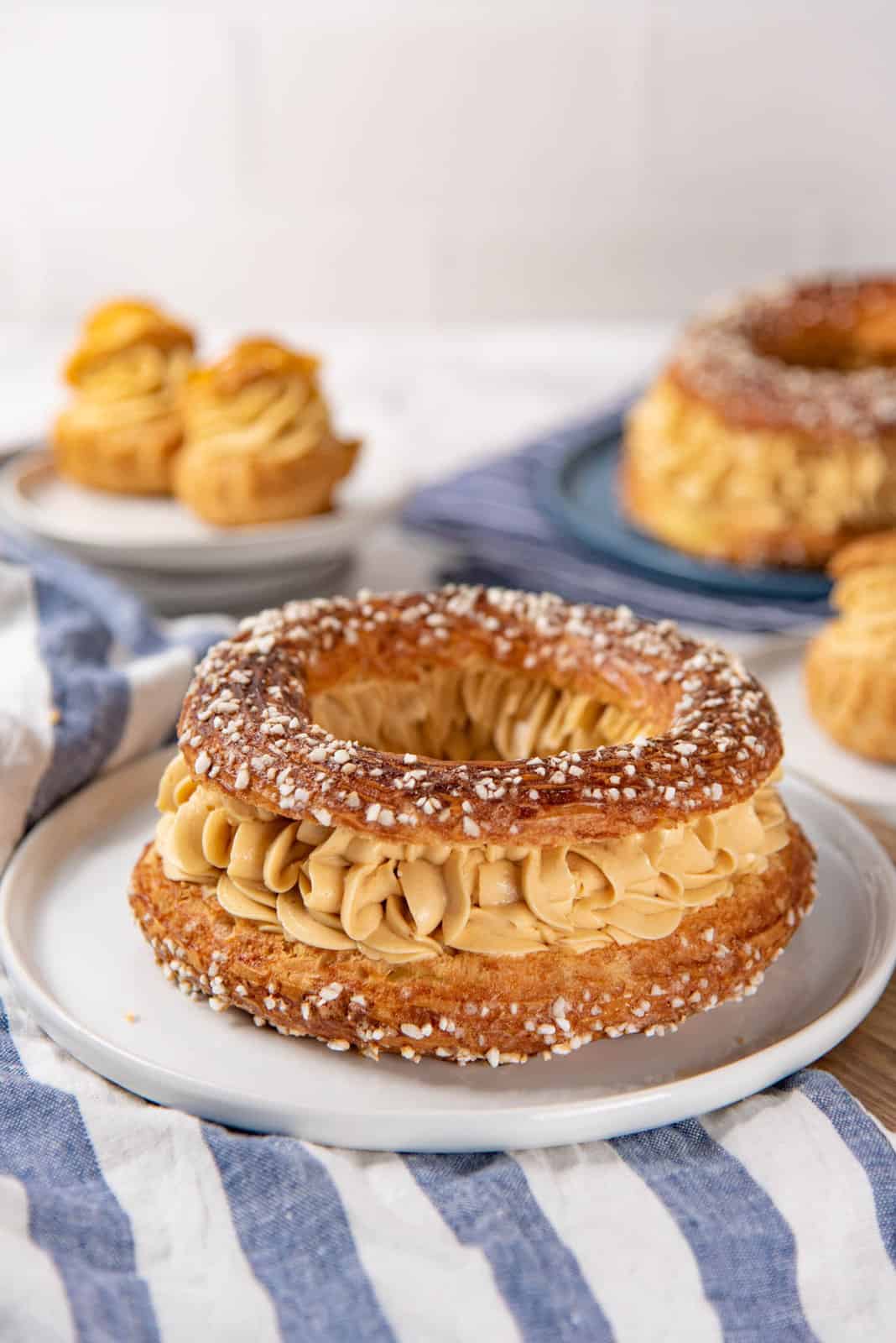
Paris-Brest with praline creme mousseline
Variations
You can add different flavors to the creme mousseline for different flavor variations.
Basic creme mousseline is vanilla flavored, and has no other additions other than butter and vanilla.
- Praline – This is the most common version after the basic vanilla version. Adding praline paste adds a lovely deep caramel and nutty flavor.
- Chocolate – Add melted chocolate to the butter for a delicious chocolate creme mousseline.
- Coffee – Add instant coffee granules to the custard for a strongly flavored coffee pastry cream.
- Fruity creme mousseline – Fruit purees can be added to the custard base to flavor it, but I highly recommend using freeze-dried fruit powders instead. These will not affect the texture of the mousseline cream. If you add fruit purees, you will have to add more liquid for a stronger flavor, and gelatin may also need to be added to give the mousseline more stability.
Recipe
Creme Mousseline Recipe
Ingredients
- 480 mL full-fat milk 2 cups
- ½ tsp sea salt
- 125 g white sugar ½ cup + 2 tbsp
- 5 egg yolks from large eggs
- 50 g cornstarch 5 tbsp (or 60 g / 6 tbsp if you’re adding any liquid additions such as fruit purees for flavor)
- 1 tbsp vanilla extract or vanilla bean paste
- 350 g unsalted butter about 25 tbsp / 12.4 oz (softened and divided into two portions). Reduce the butter to 300 g / 10.5 oz, if using praline paste.
- 100 g praline paste optional
Instructions
Pastry cream
- In a medium-sized saucepan, place the milk and salt, and heat until it’s just about to simmer (or just simmering). The milk does not need to come to a boil. 480 mL full-fat milk, ½ tsp sea salt
- While the milk is heating, in a separate bowl or jug, place the egg yolks, sugar, vanilla, and cornstarch. Whisk very well until the egg yolks start to look a little pale in color and thick, and there are absolutely no lumps in the mixture. Scrape the sides and bottom with a spatula and whisk again to make sure there are no yolk lumps. 125 g white sugar, 5 egg yolks, 50 g cornstarch, 1 tbsp vanilla extract or vanilla bean paste
- When the milk is hot, turn off the stove and remove the milk from the heat.
- Temper the egg mixture by pouring the hot milk into the egg yolk mixture in a SLOW and THIN stream while constantly whisking the egg yolk mixture. This will ensure that the egg mixture gently warms up without turning into scrambled eggs. You’ll only need to add about 1 cup of the milk mixture to temper the eggs.
- Once the egg mixture is tempered, add the tempered egg mix back into the pot with the rest of the milk, and return it back to the stove.
- Heat the custard base over medium heat (or medium-low if you’re a beginner) while whisking very frequently. Make sure to use the whisk to scrape the sides, bottom and corners of the pot to ensure that the milk is not “setting” anywhere and forming scrambled eggs.
- The custard will start to thicken. Keep whisking until the custard starts to come to a boil. To check if the custard is boiling, you will need to pause whisking for a few seconds at a time to check if there are any bubbles breaking the surface.
- When the first few bubbles start to break the surface, keep cooking the custard while constantly whisking very well for at least another minute (up to 90 seconds).
- When the custard has finished cooking, remove it from the heat and add half of the butter ( 175 g / 12 tbsp). Use only ( 150 g / 10.5 tbsp) if adding praline paste. 350 g unsalted butter
- Whisk the butter to melt it into the custard and mix it in.
- Once all the butter is mixed into the custard, pass the custard through a sieve into a bowl or container to remove any lumps.
- Place a plastic wrap over the surface of the custard, making sure that the plastic wrap is touching the whole surface of the custard to prevent a skin from forming on top.
- Chill the custard for a few hours or overnight until cold. You can let it cool to room temperature and use it immediately as well.
Creme mousseline
Preparing the butter
- If you prefer a fluffy, airy creme mousseline , you can use pastry cream straight out of the fridge. For a creamy, slightly more dense, smooth mousseline cream, let the pastry cream come to room temperature. You can either use the pastry cream as soon as it cools to room temperature (around 70 F), or allow the chilled pastry cream to come to room temperature for a couple of hours.
- Place the remaining softened butter ( 175 g / 12 tbsp) in a mixing bowl. Use only ( 150 g / 10.5 tbsp) if adding praline paste. 350 g unsalted butter
- With a whisk attachment or paddle attachment in your stand mixer (or hand-held mixer), whisk the butter until it’s creamy and has absolutely no lumps. For a fluffy result, whisk the butter with the whisk attachment until it look airy and fluffy. For a more creamy, smooth texture, use a paddle attachment.
- Add the praline paste (if using) and mix it in to the butter mixture. Use a whisk attachment for fluffy and airy results, or use a paddle attachment OR a spatula to prevent air incorporation. 100 g praline paste
Adding the pastry cream
- Add the custard into the butter in spoonfuls while mixing the butter mixture, until all of the custard has been added. Use a whisk attachment to get a buttercream-like texture. Or use a paddle attachment to add less air.
- Scrape down the sides of the bowl periodically while mixing to ensure that all the butter and custard are evenly mixed.
- Whisk until you have a smooth, creamy, pipeable mousseline cream.
- If the mixture is too runny, or warms up too much, or it’s very warm in your kitchen - transfer the mousseline bowl into the fridge and let it cool down. Then re-whisk it to get a firmer, pipeable cream. Chilling the cream longer and re-whisking it well can give you a fluffier texture.
- You can achieve your preferred cream texture by altering how long you whip the butter and the final cream. Please see recipe notes.
- Use the mousseline cream immediately, or within 1-2 days for best results.
Notes
Notes about the texture
Storage instructions
Nutrition
Recipe from The Flavor Bender by Dini Kodippili
Creme Mousseline Recipe https://www.theflavorbender.com/classic-creme-mousseline-recipe/
