
Knowing your cooked sugar stages (or candy temperatures) is CRITICAL when it comes to making candy. If you love making caramels, marshmallows, and other types of candy, this article is for you!
Learn the stages of cooked sugar with this handy information guide and chart on candy temperatures!
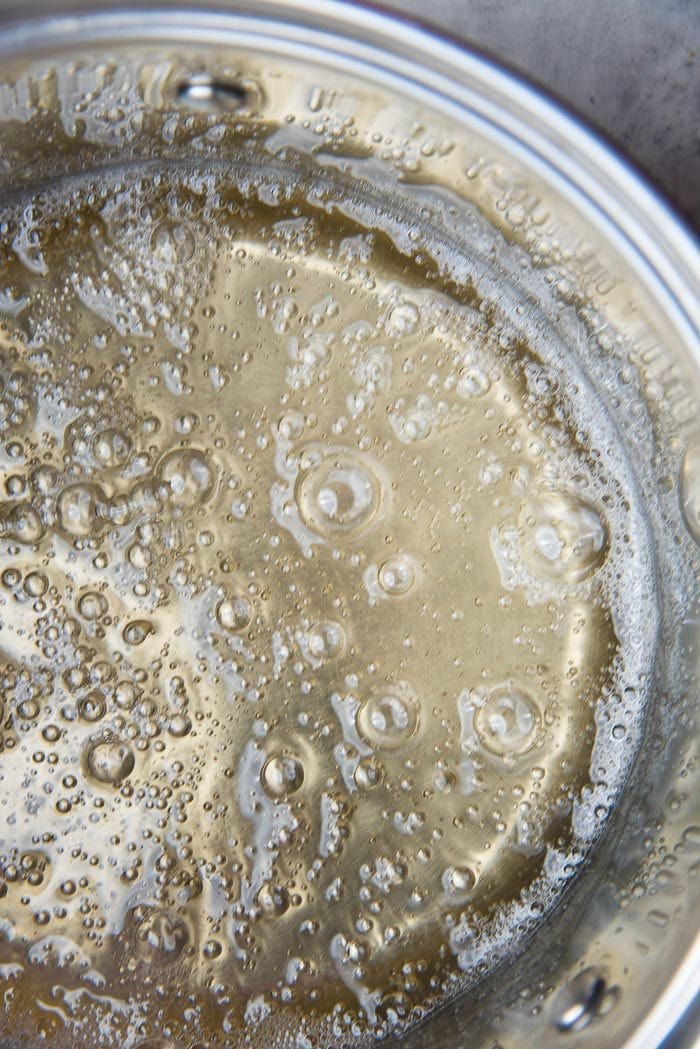
Sugar syrup at the correct temperature, in a saucepan.
- Sugar syrup (candy) stages and temperatures, and how it all works
- Explanation of the terminology
- Candy temperature chart Thread stage Soft ball stage Firm ball stage Hard ball stage Soft crack stage Hard crack stage Light caramel stage Dark caramel stage
When you’re cooking sugar with water, the sugar syrup reaches distinct stages as the temperature goes up. This article will help you accurately identify those stages to help ensure perfect results when making candy! Plus, I will also show you the different types of candy that you can make at different stages of cooked sugar. (You can also read my guide to types of sugar for more information on all the different types of sugar used in baking and cooking.)
Sugar syrup (candy) stages and temperatures, and how it all works
Sugar syrup is made by mixing sugar and water, and then melting the sugar in water as the water heats up. The longer you cook the sugar syrup, the hotter it gets (duh).
At higher sugar concentrations, there is a risk of the sugar re-crystallizing, so an invert sugar such as corn syrup (also known as glucose syrup in some countries), golden syrup, or maltose is added to counteract this.

Explanation of the terminology
When you measure the temperature of the candy syrup in order to check the stages of the cooked sugar syrup, the most reliable method is to use a candy thermometer. However, you can also perform a “cold water test”. This is how my grandmother taught me to check the candy stages when I was young, when candy thermometers were rarer and more expensive. However, these days candy thermometers are so inexpensive and easily available.
What is sugar concentration?
When you make sugar syrup, water and sugar are heated together to help dissolve the sugar to cook the sugar syrup. The boiling point of water is 212 F / 100 C. As the water boils, it evaporates from the syrup, concentrating the amount of sugar left in the syrup. And as there is less water in the syrup, the higher the temperature of the candy syrup, the more concentrated the syrup will become. As soon as all of the water evaporates, and the sugar concentration is 100%, the sucrose will start to breakdown. As the sucrose breaks down, the sugar syrup will change color and you will achieve caramel!
What is the “cold water test”?
Add some ice to cold water in a cup or jug and keep it in the freezer until needed. The water needs to be chilled. When the cooked sugar syrup is ready to be tested for the stage it’s at, pour a little of the ice water into a small dish or saucer. Drop a little of the hot sugar syrup (using a spoon), into the ice water. Depending on the sugar concentration of the candy syrup, it will form different textures as it cools down. The state of this cooled sugar syrup will correspond to the different candy temperatures in the chart.
How do I know if my candy thermometer is accurate?
To make sure your candy thermometer is accurate and calibrated, place the thermometer in boiling water. If the reading is 212 F / 100C, then it’s accurate.

Candy temperature chart
Cooked Sugar Syrup Temperatures
| Sugar stage and appearance | Temperature | Uses |
|---|
Thread stage
| Thread stage Sugar concentration; 80% | 223 °F – 235 °F 106 °C – 112 °C | Syrups, Fruit pastes, Candied fruit |
|---|
At this stage, the sugar syrup / candy syrup will still be clear. The syrup will form a fine “thread” or line when drizzled over ice water. The sugar at this temperature will still be liquid and will not set to make candy.
Soft ball stage
| Soft ball stage Sugar concentration; 85% | 235° F – 240° F 112° C – 115° C | Fudge, Fondant, Italian meringue, Italian meringue buttercream, Pâté à bombe, 7 min frosting |
|---|
At this stage, the sugar syrup will form a ball in ice water. The sugar ball will be soft and flatten in your hand (will not hold its shape).
Firm ball stage
| Firm ball stage Sugar concentration; 87% | 240° F – 250° F 115° C – 121° C | Caramels Italian meringue, Italian meringue buttercream, Pâté à bombe, Marshmallow (softer texture) |
|---|
The sugar at this stage will also form a ball in ice water. The ball will not flatten in your hand and will retain its shape. However, this ball is malleable and can be flattened with your fingertips easily.
Hard ball stage
| Hard ball stage Sugar concentration; 92% | 250° F – 267° F 121° C – 130° C | Marshmallows (with a firmer texture), Taffy, Nougat, Divinity, Cream fondant |
|---|
The sugar syrup will form a ball in ice water, which will remain as a ball in your hands. Still fairly malleable, but not as much. You can mold the ball into shapes with your fingers. The cooked sugar syrup will drop from the spoon in thick strands at hard ball stage (or look rope-like). The syrup will cling to the spoon as well.
Soft crack stage
| Soft crack stage Sugar concentration; 95% | 270° F – 290° F 132° C – 143° C | Nougat, Butterscotch, Candy apples |
|---|
When a little of this sugar syrup is dropped into ice water, it’ll harden into solid threads. However, you should be able to bend these threads slightly before they crack. When the sugar at this stage hardens at room temperature, they will “bend” before breaking. At this stage the cooked sugar syrup is thicker, showing smaller bubbles as they cook, compared to the previous stage.
Hard crack stage
| Hard crack stage Sugar concentration; 99% | 295° F – 310° F 146° C – 154° C | Honeycomb candy , Brittle , Candy apples, Hard toffees, Cotton candy, Lollipops |
|---|
The cooked sugar syrup will harden at this stage in ice water and break into pieces when bent. When the sugar at this stage hardens at room temperature, it’ll be rock hard. It will also be harder to break if the sugar is thick, and will require some force to do so.
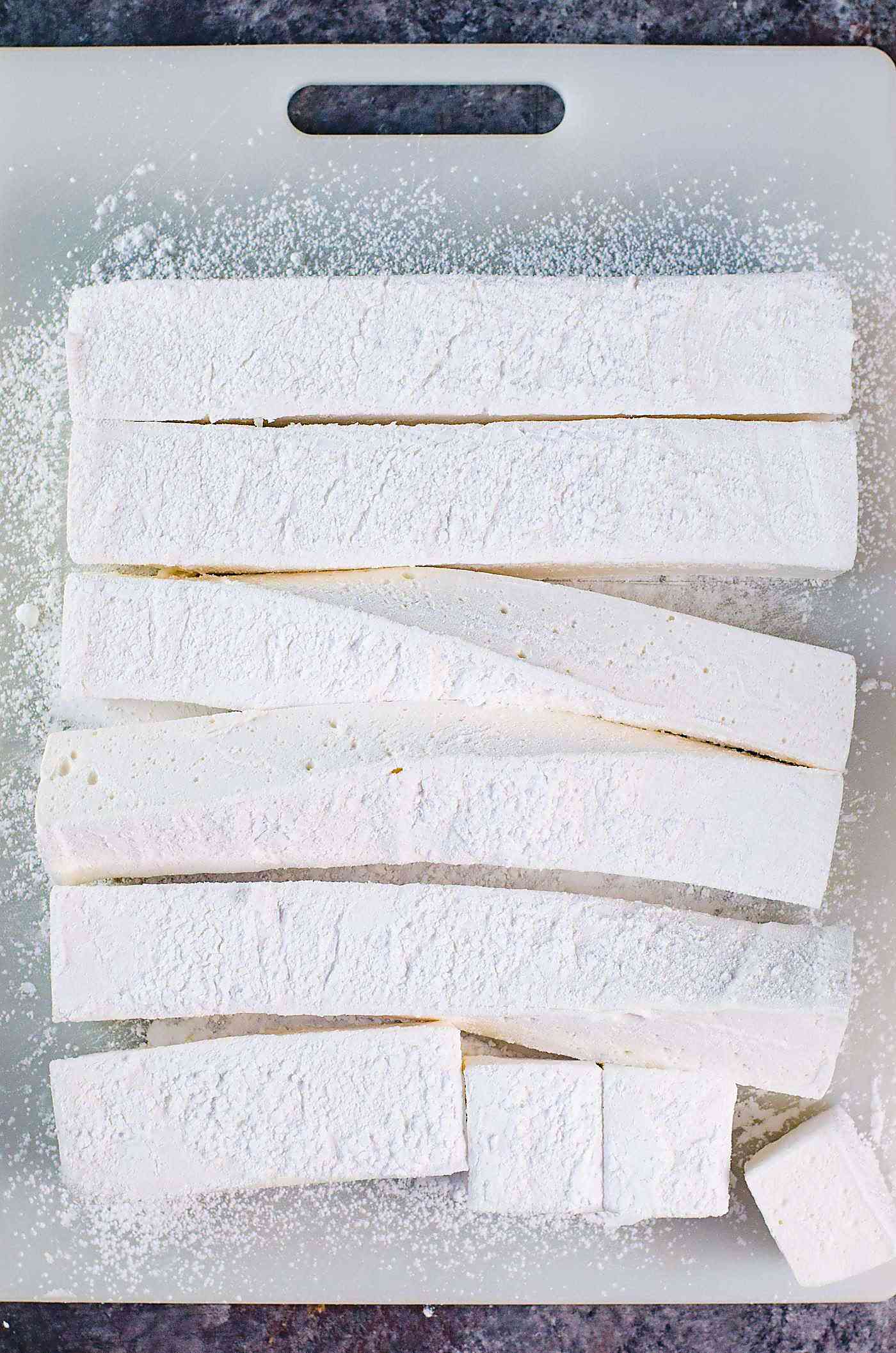
Caramel stages
At over temperatures of 320° F / 160° C
The sugar concentration is over 99%, and the sugar starts to break down and turn darker in color. Caramel adds a richer flavor to desserts and will always set hard. At 320° F / 160° C, the syrup is still clear, but will rapidly change color as the water evaporates completely and the sucrose breaks down.
Light caramel stage
| Light caramel Sugar concentration; 100% | 325° F – 340° F 163° C – 171° C | Flan / caramel pudding topping , Spun sugar and sugar cages , Decorative caramel , Candy coatings for nuts |
|---|
The caramel is light golden color to golden color. The caramel flavor is light, but it will continue to darken and deepen in flavor as long as there is residual heat.
Dark caramel stage
| Dark caramel / burnt sugar Sugar concentration; 100% | 350° F – 360° F 177° C – 182° C | Great to add a deeper flavor, Caramel based sauces (sweet and savory), Caramelizing for creme brulee |
|---|
The caramel here is a dark amber / dark brown color. It will change color from golden to a dark reddish amber as the temperature rises. Cooked sugar syrup with dark amber color is also known as burnt sugar. This sugar stage is less sweet, and a little bitter with lots of caramel flavor. Personally, this is my favorite sugar syrup stage for salted caramel sauce .

