
Here’s all about how to make the BEST Easy Shortbread Cookies! Buttery, crumbly and light – classic shortbread cookies are one of a kind. And you only need a minimum of 3 ingredients (butter, sugar, flour) to make them!
I provide ALL the tips to help you make PERFECT shortbread cookies, as well as the softer Scottish shortbread cookies.

- What are shortbread cookies?
- Why you’ll love this recipe
- Ingredients to make these cookies
- How to make the best shortbread cookies (with tips)
- My BEST tips for shortbread cookies
- What are Scottish shortbread cookies?
- How to make Scottish shortbread cookies
- Recipe variations and substitutions
- Frequently asked questions
I make cookie boxes for friends every year during Christmas time. Along with my thumbprint cookies , Mexican wedding cookies (aka snowball cookies) , ginger cookies , linzer cookies , and funfetti cookies , these shortbread cookies are always featured in these cookie boxes.
And these delicious cookies are always a crowd favorite! I’ve been baking shortbread cookies for as long as I can remember, so I thought I’d share with you guys my basic recipe for classic shortbread cookies.
Once you nail this base recipe, switching it up with other flavors and ingredients is so simple.
Check out my chocolate shortbread cookies , buttery espresso shortbread cookies , and chocolate chip shortbread cookies , and spiced millionaires shortbread cookie bars for more ideas and inspiration!
What are shortbread cookies?
Just like shortcake or shortcrust pastry , shortbread cookies get their “short” prefix because of the crumbly texture.
The large amount of butter in the cookies makes them crumbly, while also giving them a nice buttery flavor.
Shortbread cookies are insanely popular throughout the world. They originated in Scotland. Traditional shortbread cookies are typically thick, and cooked at low temperature, resulting in delightfully buttery and crumbly cookies.

Modern shortbread cookies
Shortbread cookies today come in different shapes and forms. You can shape them into wedges (the classic shape), or into fingers (my favorite), circles, or use cookie cutters to get whatever shape you fancy.
And instead of regular buttery shortbread cookies, you can make flavored shortbread cookies, or dip them in chocolate and add nuts or sprinkles!
So, let’s look at how to make butter shortbread cookies and also how to make Scottish shortbread cookies.
Why you’ll love this recipe
- These shortbread cookies are the real deal! Buttery, crumbly, with a lovely buttery but sandy mouthfeel. Just the way shortbread should taste like.
- You only need 3 ingredients for this shortbread cookies recipe.
- I provide detailed instructions so that it’s easy even for beginners to make shortbread cookies.
- Follow my pro tips below, so that rolling shortbread cookies becomes such a breeze!
- Easily adaptable recipe , so that you can add other flavors to your shortbread cookie dough.
- Perfect for the holiday season and for gift-giving.
Ingredients to make these cookies

THREE basic ingredients are all you need to make classic shortbread cookies.
- Butter (usually unsalted)
- Sugar (caster sugar is better)
- Flour
You can make perfect shortbread cookies with just these three ingredients. But you can also change up the flavor and texture of these ingredients to make these shortbread cookies taste even better. Here’s how.
Butter
The one thing that you shouldn’t skimp on with shortbread cookies is the butter. They are butter shortbread cookies after all.
So, use a GOOD QUALITY butter, because the flavor of butter is first and foremost in this buttery shortbread cookie recipe. European butter is even better, because it has a better taste AND has less water than other types of butter.
More fat in the butter makes for a better tasting butter, which means you can make a better tasting shortbread cookie. It’s the same principle that applies to rich pastries such as French croissants.
How to enhance the butter flavor for these cookies
Melt the butter and toast it to turn it into brown butter . But, if you do that, remember to return the brown butter to the fridge so that it hardens again, and you will need to re-measure the butter as well. Never make shortbread cookies with melted butter!
Salt is also a crucial ingredient when it comes to baking, because it can coax out more flavor from your baked goods. You can make these shortbread cookies with good quality salted butter if you like, but I prefer to add salt separately as I mix the unsalted butter.
This lets me control the amount of salt I add to the butter, AND I can use a clean tasting sea salt as well. That way you get the best of both ingredients.
Another reason is that salted butter has MORE water content than unsalted butter, and that can have an impact on the taste.
Sugar
Caster sugar (or superfine sugar or baker’s sugar) is the sweetener of choice for me for these cookies. The fine sugar granules dissolve in the butter a lot faster, and this is crucial for shortbread cookies.
Undissolved sugar crystals in the dough can cause the cookies to spread too much as they dissolve in the oven, and change the texture of the cookies.
Even if you can’t find superfine sugar, no worries – you can simply use regular granulated sugar and then process it in a blender or food processor for a few seconds or up to a minute to make it finer.
You CAN also use confectioner’s sugar (icing sugar) for this recipe. But remember confectioner’s sugar is a mixture of sugar and cornstarch. So, instead of using 4 oz of sugar, you’d have to use 5 oz of confectioner’s sugar to achieve the same level of sweetness.
This might make your shortbread cookies a little crumblier than usual, since the amount of flour will be the same. But it won’t take away from the flavor though!
You can read my baking basics article on guide to types of sugar for more information on choosing the right type of sugar for all your baking needs.

Flour
You can make the most amazing buttery shortbread cookies with just all purpose flour, mixed in with butter and sugar. This is how classic shortbread recipes were always made.
However, I like to replace SOME of the flour with rice flour or cornstarch. The reason is that rice flour or cornstarch changes the texture, and turns these into melt in your mouth cookie with a lighter, nicer mouthfeel.
If I have rice flour at home, then that’s my first choice. If not, then I’ll use cornstarch. And if I have neither, then I’ll just stick with all AP flour. This is just a simple way for you change up your shortbread cookie game, and alter their flavor and texture.
It’s this short list of ingredients that makes easy shortbread cookies different from sugar cookies too.
Sugar cookies (like these funfetti cookies) also include flavoring, eggs, and a leavening agent like baking soda or baking powder.
Homemade shortbread cookies do NOT contain eggs or a leavening agent, although flavoring can certainly be added. And as the name implies, sugar cookies have a higher sugar content and are sweeter, and also lighter and more crisp as well.
How to make the best shortbread cookies (with tips)
Step one – cream the butter
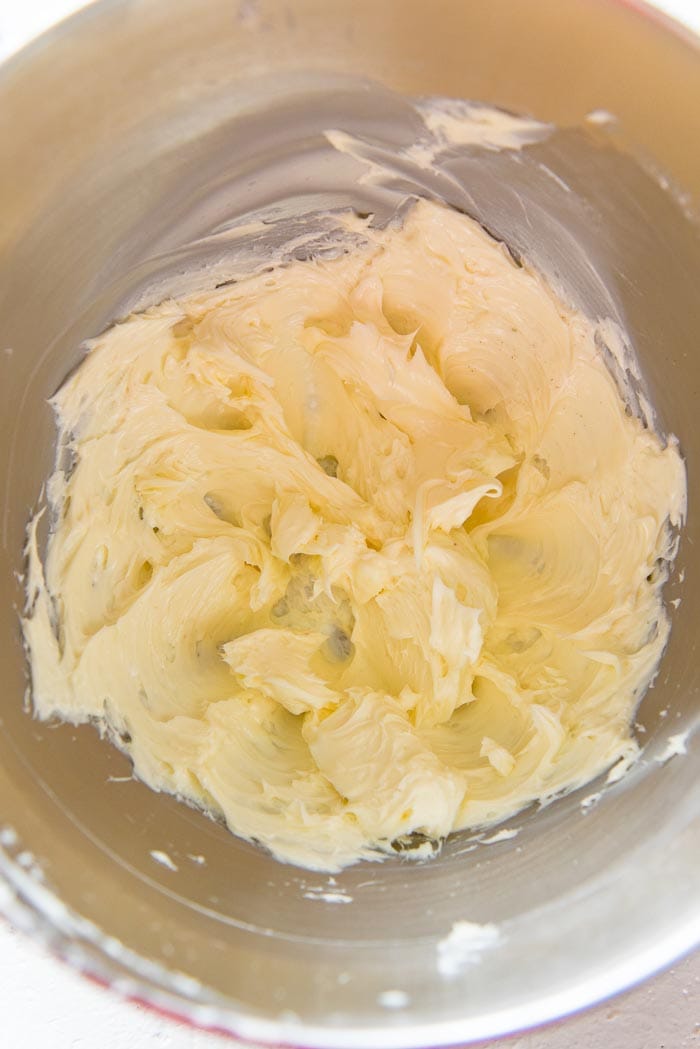
The first step is creaming the butter. But make sure NOT to incorporate too much air into the butter when you do this.
The more air you introduce, the more spreading that will occur as the cookies bake. So beat the butter just enough to make it nice and creamy, but not fluffy.
I like to add the salt at the same time as I cream the butter, but you can add it along with the sugar in the next step as well.
Step two – add the sugar
The second step is adding the sugar. And since you want to avoid incorporating too much air, it’s important that the sugar dissolves easily into the butter as well. This is where superfine sugar really helps.
It mixes and dissolves quickly, leaving no unsightly, undissolved granules in the dough. So, mix the butter and sugar just enough until you get a smooth paste, but again, make sure it’s not too fluffy.

Creamed butter and sugar mixture
Step three – add the flour
Third step is adding the flour. I like to add AP flour and other flours together. If you’re using only AP flour, that’s OK too. Just make sure there are no lumps in the flour, and that you add them at the same time.
You want to mix the flour into the dough with minimal effort, in the minimum amount of time. The longer you work the dough with the flour, the more gluten you develop, causing the cookies to be chewy and tough, instead of light and crumbly.
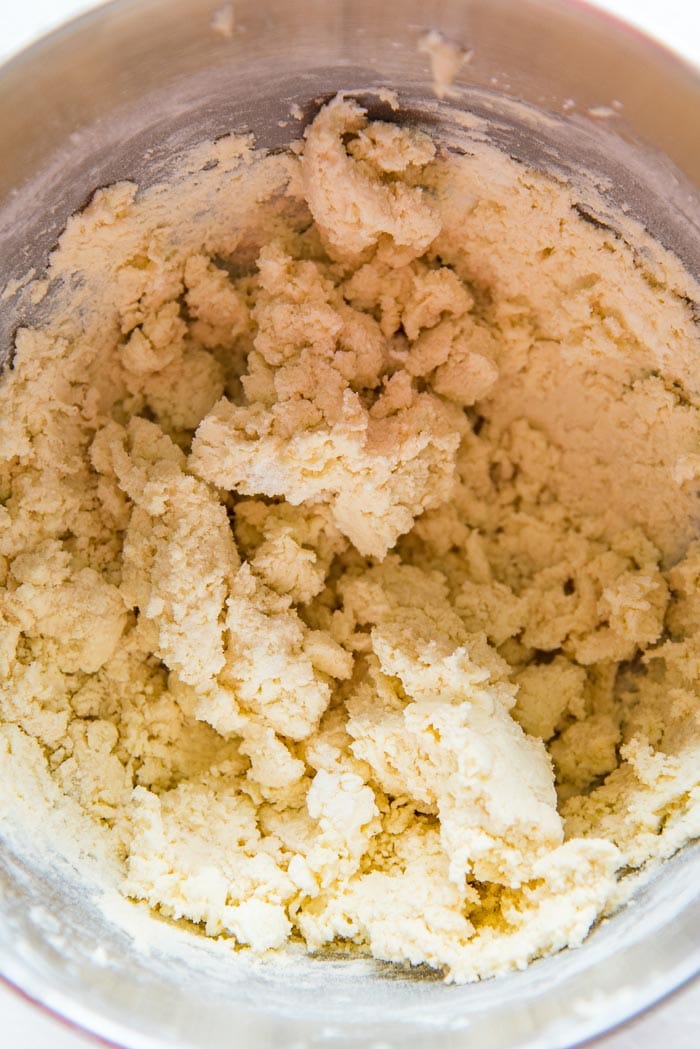
I only use the LOWEST speed on my mixer (stand mixer or hand mixer) to incorporate flour into the butter-sugar mix. Mix it just enough to create clumps of flour, with no dry spots, and then immediately stop mixing.

Clumps of dough after adding flour
Step four – make the dough
Fourth step is to bring the clumps of flour together to make a cohesive ball of dough. Fold and knead the dough two or three times (very gently), to bring the dough together if needed.
Now, the dough is ready to be rolled out and cut out for the best shortbread cookies!
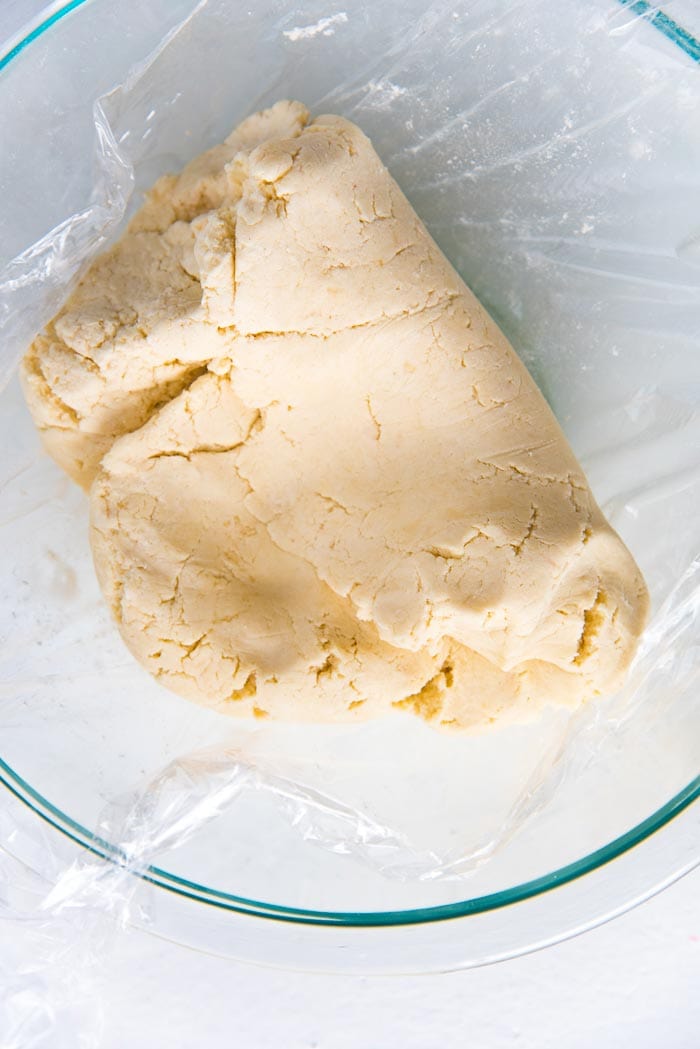
The shortbread dough coming together
My BEST tips for shortbread cookies
- Make shortbread with good quality ingredients! Since this simple recipe has so few ingredients, make sure you’re using good quality ones. Especially with the butter! A butter that tastes good will result in the best buttery shortbread cookies.
- Just as with any cake or cookie recipe, do not overmix the flour. The more the flour is mixed, the more gluten is developed. This will result in a hard, rubbery cookie.
- Bring the dough together by hand. Once all the flour is added, use your hands to form the dough. This also prevents the dough from being overmixed.
- I share my favorite tip for making shortbread dough – using a ziploc bag to roll out dough (see below)! This addresses so many problems that can arise from making shortbread cookies.
- Ziploc bags also make it super easy to make the dough in advance and refrigerate or freeze for later!
- You can cut the dough into individual cookies like classic shortbread cookies, or use cookie cutters to cut them in different ways as well.
- Shortbread cookies with an even thickness will bake evenly . Use dough thickness guides to ensure that your dough is rolled out with an even thickness.

Is there an easy way to roll and cut shortbread cookies?
YES! This brings me to my secret weapon – my favorite trick for making shortbread cookies!
Put the dough in a gallon-size ziploc bag. Trust me, this is a game-changer if you want to make individual shortbread cookies (cut out shortbread cookies, instead of Scottish shortbread cookies).
I learned this trick ages ago, when I was first struggling to roll out the shortbread cookie dough to an even thickness, with minimal dough scraps.
I’d roll out the cookie dough with wax paper or parchment paper or plastic wrap to prevent the dough from sticking to the surface. But I always ended up with dough scraps when I cut out the cookies, because it was too hard to roll it out to a proper square or rectangle AND an even thickness.
Plus I end up over-handling the dough, which is never a good thing.
The gallon ziploc bag fixes this issue! No more sticky dough. Instead, perfect smooth surfaces, and minimal dough scraps.
PLUS, you will have rolled out your shortbread cookie dough to the size you want in a matter of minutes.

Using a gallon size ziploc bag to roll out the dough
Put the dough inside the gallon ziploc bag, and press the dough into the corners of the bag. And then using a rolling pin, evenly press it to make an evenly thick slab of dough inside the bag. Keep the bag open to allow excess air to escape.
Roll out the dough, while it’s inside the bag, until it’s about 1/2 inch thick, evenly, and rectangular in shape (it won’t fill the whole gallon bag).
This way you end up with a perfectly rolled shortbread dough, with minimal fuss.
Then chill the dough, so that it’s easier to cut into fingers (or any other shape you like using cookie cutters), pierce the cookies with a fork (to minimize spreading), and chill the cut cookie dough a little more before baking.

Tips to minimize cookie spreading
- Do not incorporate too much air into the dough. The more you beat the butter and sugar, the more air you add to the dough. This results in the cookies expanding and spreading as they bake.
- Always use a baking sheet that is at room temperature or chilled. Warmer baking trays will melt the butter and encourage the cookies to spread while baking.
- Do not bake the cookies at a low temperature. Cut shortbread cookies should be baked at 350 F / 180 C. The higher heat will set the cookies faster, and prevent too much spreading. However, Scottish shortbread cookies are baked at a lower temperature because they are much larger and are contained in the baking dish. Therefore, it must be baked slowly for even baking.

What are Scottish shortbread cookies?
Scottish shortbread cookies are made using the same shortbread dough, but are shaped and baked slightly differently.
Instead of cut individual cookies, Scottish shortbread cookie dough is baked as one large dough. And it’s baked WITHIN the baking pan, and THEN cut into individual cookies.
These can be wedge shaped (baked as a circle), or rectangle (baked as a square or rectangle).
The resulting cookies are a little softer, and more crumbly than classic shortbread cookies. They can also be a little thicker.

Thicker, softer Scottish shortbread cookies
How to make Scottish shortbread cookies
These are more crumbly, softer, and thicker shortbread cookies. This very same shortbread dough can be used to make Scottish shortbread cookies. Here’s how.
Once you’ve made the shortbread dough, transfer it into a ziploc bag, or place it between two parchment paper sheets.
At this point, you need to decide whether you want to make Scottish shortbread cookies as a wedge (classic shape), or rectangles, so that you know which pan to use for baking.
For wedges – Springform circle pan (8 or 9 inch)
For rectangles – Square pan (8 inch)

Gently press the dough and shape it a little smaller than the size of the pan you’re going to use (square or circle). Then transfer the dough into the lined pan, and press it towards the edges of the pan, while making sure the dough has an even thickness everywhere. I use a toothpick to make sure that it’s even along the edges of the pan.
An 8 inch round pan will create shortbread cookies that are about 1 inch thick, and a 9 inch round pan or 8 inch square pan will create shortbread cookies that are about 1/2 – 3/4 inch thick.
Cut the dough into wedges while in the pan. Bake the cookie dough at a lower temperature, until the dough is mostly cooked through.
Then cut the cookies along the same cuts you made earlier, and bake the individual cookies in the oven for just a few more minutes, until you get thick and delightfully buttery Scottish shortbread cookies!

Recipe variations and substitutions
- Vegan shortbread cookies – These cookies bake and taste very well even with vegan butter. The trick is to use a baking vegan butter that is firm when in the fridge. The dough however might be softer than regular shortbread cookies, but you can fix this by adding just a little extra flour.
- Butterscotch shortbread cookies – Substitute the caster sugar with brown sugar to make a shortbread cookie with a more molassey flavor. However, due to the extra moisture in the brown sugar, the cookie can spread a little more than the classic version.
- Gluten free shortbread cookies – I haven’t made gluten free shortbread cookies personally, but I have had readers who substituted the flour with 1:1 GF flour substitute and still got great results.
- For shortbread cookies with a more crumbly, crisp texture – substitute some of the flour with rice flour.
- Soft and melt in your mouth shortbread cookies – Substitute some of the flour with cornstarch.
Flavor additions
Usually, butter shortbread cookies do not need any flavoring. However, you can absolutely add flavoring if you prefer. Here are some options.
- Vanilla extract
- Almond extract
- Orange or lemon extract
- Orange or lemon zest
- Espresso powder for espresso shortbread cookies
- Cocoa powder for chocolate shortbread cookies
- Other additions that can be added to shortbread cookie dough
- Mini chocolate chips for chocolate chip shortbread cookies
- Finely chopped roasted nuts – hazelnut, almond, walnut or praline shortbread cookies.
- Funfetti sprinkles – for funfetti shortbread cookies
- Finely chopped dried fruits like raisins, craisins, dried apricots, or dried cherries, or dried cranberry for cranberry shortbread cookies
- Make shortbread cookie balls and fill them with jam or jelly for a unique cookie ball version of thumbprint cookies
Ideas for glazes or toppings
I personally don’t think shortbread cookies need anything on top, but there are great ways to make these cookies even more decadent.
- Millionaires shortbread bars – These bars can be topped with caramel and chocolate to make millionaires bars or twix bars.
- Chocolate dipped shortbread cookies – Dip individual cookies in melted chocolate, like I did with these espresso shortbread cookies .
- Royal icing – These cookies can be used like cut out cookies and be decorated with royal icing and sprinkles.
- Buttercream frosting – Just like buttercream topped sugar cookies, but with shortbread cookies.
- Sandwich cookies – Shortbread cookie dough can be used to make sandwich cookies like these melting moments cookies with a ganache filling in the middle.
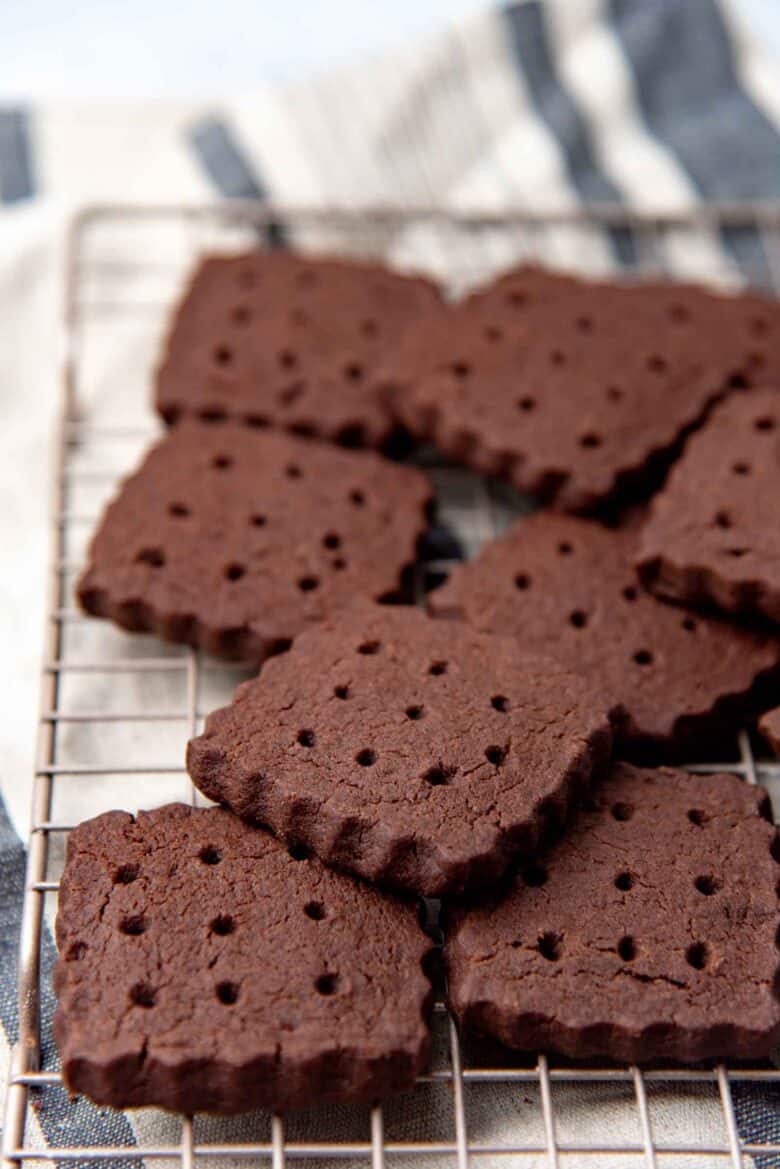
Chocolate shortbread cookies
Shortbread cookies vs butter cookies vs sugar cookies
Shortbread cookies contain more butter in the dough. The higher butterfat content results in a cookie that is more crumbly and melts in your mouth. Shortbread cookies usually do not contain any eggs. Butter cookies, contrary to their name, actually contain more sugar than their buttery cousin – shortbread cookie. This results in a sweeter, more crisp cookie. Butter cookies also usually do not contain any eggs. Sugar cookies are similar to butter cookies because they have a higher sugar content than shortbread cookies. Sugar cookies also contain eggs as a binder, and a chemical leavener like baking powder or baking soda to create lift. This results in a crisp and sweet cookie that holds its shape well. While both butter cookies and shortbread cookies do not necessarily use flavor extracts, sugar cookies have added extracts, usually vanilla or almond extract.
How do you know when shortbread is done baking?
Shortbread cookies ideally shouldn’t have any color to them. So, it’s hard to know when the cookies are baked through. When the bottom edge of the cookies is just starting to color, then remove the cookies from the oven. The more you bake these cookies, the easier it will be to tell when the cookies are done baking.
Can I make the shortbread dough in advance?
Yes, you can! Shortbread cookie dough can be made up to 2 months in advance. Usually, I would roll out the dough inside the ziploc bag and then store it in the freezer. Then I can cut the dough and bake it easily.
How to store shortbread cookies
Baked shortbread cookies should be stored in an airtight container. They can be kept in a cool place for up to 5 days. They can also be stored in the fridge for up to 2 weeks, but they can get stale if proper food handling practices are not followed.
Can you freeze shortbread cookies?
Yes, you can store the shortbread cookie dough and the baked cookies. To store the shortbread cookies longer, wrap them in aluminum foil, then place them in an airtight container, and freeze for up to 1 month. Let the cookies thaw at room temperature, and enjoy!
Can I reduce the sugar content in the recipe?
In theory, you can reduce the sugar in the recipe. However, this will absolutely affect the results. The shortbread cookie will not be as tender, and will taste more like flour and butter (like a slightly sweet and over-baked biscuit).
Recipe

There’s a reason why Classic Thumbprint Cookies are so popular. They are a holiday favorite, easy to make, and even easier to customize with different filling and flavor variations!
I’ve shared all my tips and tricks to help you PERFECT easy thumbprint cookies!

Oh baby, it’s cookie season! It’s one of the main reasons why I love Christmas! 🙂
And with alllll the Christmas cookies out there, it’s hard – nigh impossible, for me to pick a favorite. But Classic Thumbprint Cookies …. oh yeah, they come this close to being my favorite.
Thumbprint cookies are a holiday favorite, a party favorite, and a snack favorite for me. These are one of half a dozen or so that feature in my holiday cookie boxes every year. Shortbread cookies , linzer cookies , meringue cookies , soft ginger cookies etc. are all classics for a reason.
Plus, these cookies are really easy to make and to customize too.
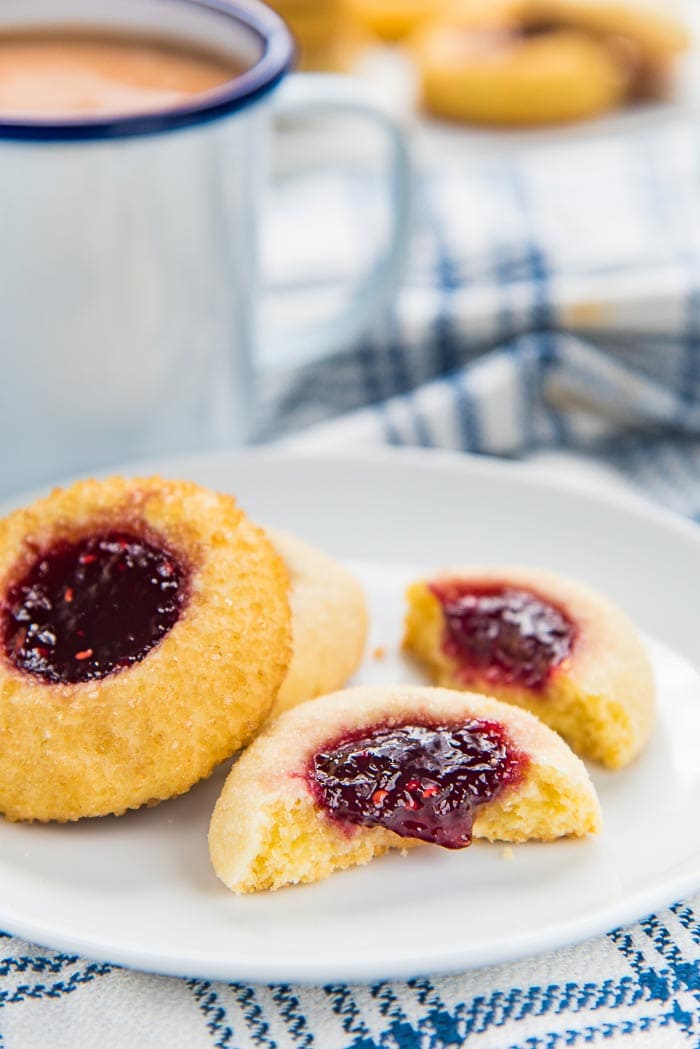
I’ve shared a uniquely delicious savory thumbprint cookie on the blog before, which is really popular on the blog. But I realized I’ve never shared a classic thumbprint cookie recipe with you guys before. So today, I’m going to fix that.
This is the recipe for delightfully buttery and delicious classic thumbprint cookies with a sweet jam filling . I’m sharing all my tips to help you make PERFECT thumbprint cookies and avoid cracks and spreading.
Just follow this easy guide to find out how you can nail those classic thumbprint cookies and entertain your friends and family this holiday season!
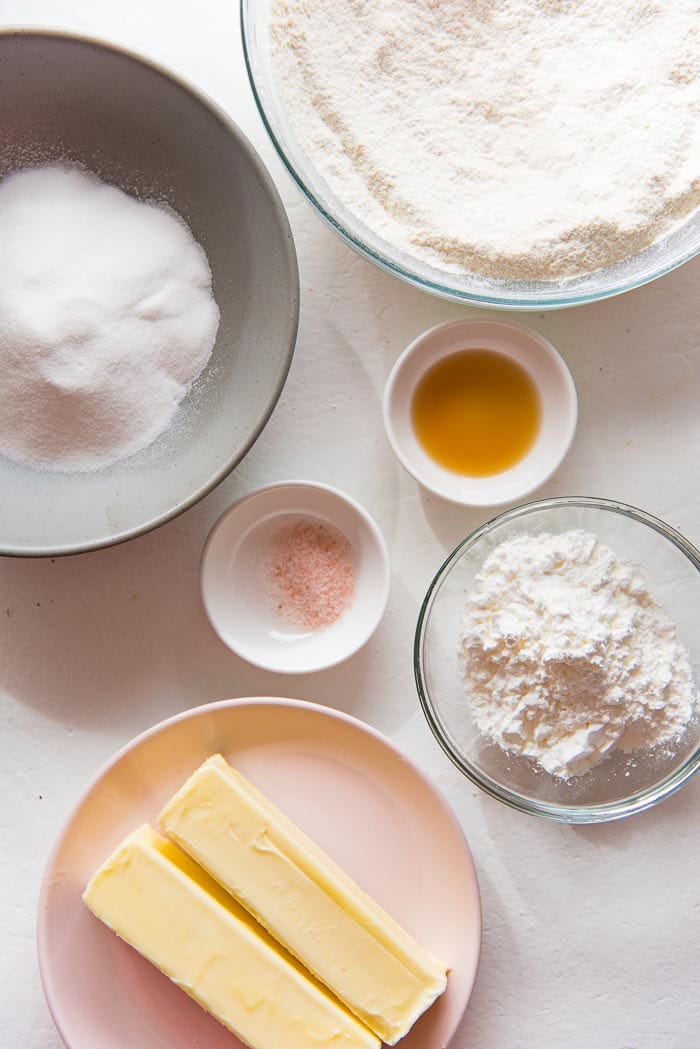
What are thumbprint cookies?
A buttery cookie with a shallow well in the middle that’s filled with a sweet filling like jam. You use your thumb to push down on the cookie dough, creating that shallow well in the middle – hence “thumbprint” cookies.
But did you know that thumbprint cookies originated in Sweden? These cookies are called Hallongrotta/hallongrottor in Swedish, meaning “raspberry cave”!
While you can fill the thumbprint in the middle with any type of jam you like, I’ll be using raspberry jam here, because that’s the flavor of classic thumbprint cookies! But I have filled these before with strawberry jam , plum jam , fig jam , and grape jelly too.
Are thumbprint cookies the same as shortbread cookies?
They are not the same, but they do come VERY close. Shortbread cookies use a 1:2:3 ratio of sugar, butter and flour. They are buttery, but crumblier, because they don’t have a binding agent. They rely on butter to hold the dough together.
Thumbprint cookies are made with a dough that’s identical to shortbread cookies, BUT the dough has eggs in addition. Some recipes call for whole eggs, but my recipe uses egg yolks only.
The egg yolk enriches the dough giving you a richer taste than shortbread, but more importantly, binds the dough together for a smoother and more pliable result.
That being said, you still CAN make thumbprint cookies with shortbread cookie dough as well.
How can I prevent my thumbprint cookies from cracking?
To be honest, there’s nothing wrong with thumbprint cookies with a few cracks along the edges. That’s part of the charm!
However, there are ways to minimize cracking. It’s got all to do with HOW you shape the cookies .
How to minimize thumbprint cookie cracking
- Keep the dough soft – once the cookie dough is made, cover and let it rest for at least 15 minutes at room temperature, so that the dough will be easier to handle, and be less sticky. It’s important to keep the dough at room temp. when you roll it into balls, because then it’s easier to shape the soft dough, with minimal cracking.
- Make the indentation as soon as the cookies are formed – rather than rolling ALL of the cookie dough into balls first and THEN making wells, you should roll each cookie dough ball, place it on the cookie tray and immediately make the indentation BEFORE preparing the next one.
- Roll the cookie dough balls until the surface is smooth – since the dough is soft, it’s easy to get a nice, smooth surface. Make sure there are no cracks to begin with, so that they don’t widen and show up when you press down on the cookie balls to create the wells.

To elaborate on the second point above, the reason why I like to prepare each thumbprint cookie as I go is that once you have rolled the cookie into a smooth ball, the cookie will form a “crust” – much like any dough will do, if it’s left exposed to air for any amount of time. So if you wait until the end to create the wells in the middle, the crust will most definitely cause the cookies to crack. To avoid that, I do the following.
How to make thumbprint cookies
- First, portion the cookie dough with a cookie scoop.
- Roll the cookie dough into a smooth ball.
- Roll the smooth ball in sugar (optional).
- Place the cookie ball on the parchment paper-lined baking tray.
- Use my thumb or another kitchen utensil to form an indentation in the middle of the cookie.
- Repeat steps 1-5 with the rest of the cookie dough.
- Once the baking tray is filled with cookies, fill the wells with jam.
- You can either fill a second tray with more cookies and keep those in the fridge or freezer, OR wrap any remaining dough tightly with plastic wrap and keep it at room temperature until you’re ready to use.
I also like to coat these easy thumbprint cookies in sugar before placing them on the baking tray. You can use regular granulated sugar or raw sugar for this. I prefer d emerara sugar because that gives these thumbprint cookies a nice sweet crunchy texture as well.
And rather than rolling the cookie balls in sugar, I put the sugar in a small ziploc bag and then place a cookie inside the bag, and then shake it a little bit to evenly coat the cookie with sugar. Works like a charm.

How to minimize thumbprint cookie spreading
It’s pretty much impossible to make a good cookie with NO spreading at all. I mean, in theory you can add more flour to the dough until it’s pretty stiff and won’t spread at all, but then you end up with very dry, crumbly cookies.
Not good.
The simple reason why a cookie spreads as it bakes is that the butter and sugar melt inside the cookie, causing it to spread. If you bake at too low a temperature, the cookie will spread too much before it bakes and sets properly, and if you bake at too high a temp., then the cookie bakes and sets outside quickly, but the middle will still be raw.

Tips to minimize cookie spreading
- Chill the cookies in the fridge BEFORE baking – cooling the butter in the cookies before baking means that it won’t melt as readily, making it spread too fast.
- Use a chilled or room temperature baking sheet – NEVER use a hot or warm baking sheet to place your UNBAKED cookies on. I like to chill the cookies AND the baking tray together in the fridge, but at least make sure the baking tray is at room temp. before you place the unbaked cookies on it.
- Make the indentation in the middle narrow rather than wide – use just the tip of your finger and go straight down, to create a narrow indentation in the middle of the cookie, rather than a wide indentation that would make the thumbprint cookie spread.
So there you go! That’s how you can make PERFECT and EASY thumbprint cookies that are sure to impress your friends and family! 🙂
Then you can fill these classic thumbprint cookies with any type of jam you like. Personally, I love raspberry, or apricot jam.
These easy thumbprint cookies are so so good! The cookies are buttery, with a hint of vanilla, and a deliciously fruity jam filling.
And since these classic thumbprint cookies are so easy to make, you can make multiple batches and gift them to your friends and family this holiday season too. You can fill them with different jam fillings, and even flavor the thumbprint cookies with different extracts for some creative variations.

Flavor variations
- Add some orange zest to the cookie dough, and fill the middle with cranberry sauce.
- Add some lemon zest to the cookie dough, and fill the cookies with blueberry jam.
- Or instead of jam, place a reese’s peanut butter cup or a hershey’s kiss candy in the middle.
- Add some almond extract to the cookie dough, and fill the middle with salted caramel sauce .
There are so many ways you can dress up these easy thumbprint cookies! Once you realize how easy it is to make classic thumbprint cookies, you can make them your own.

Recipe
Easy Shortbread Cookies
Ingredients
- 2 sticks unsalted butter 1 cup
- ¼ tsp fine sea salt
- 4 oz caster sugar ( ½ cup + 1 tbsp), see recipe notes below
- 2¾ cup AP flour 12 oz / 2¾ , see recipe notes for recommendations
Flavoring (optional - see recipe notes)
- 2 tsp vanilla extract OR
- 1 ½ tsp almond extract
- 2 tsp orange extract OR
- Zest of half an orange
Instructions
Easy shortbread cookies
- Place the butter and salt in the mixer bowl, and mix on medium speed until creamy (using a paddle beater) - about 2 - 4 minutes. You an use a stand mixer or a hand-held mixer. 2 sticks unsalted butter, ¼ tsp fine sea salt
- Add the sugar and mix until the sugar and butter are well mixed, and the mix is nice and creamy - about 1 - 2 minutes. If you’re using any flavoring, add it to the mixture along with the sugar. 4 oz caster sugar, 2 tsp vanilla extract OR, 1 ½ tsp almond extract, 2 tsp orange extract OR, Zest of half an orange
- Add the AP flour and rice flour (if using) and MIX ON LOW (or the stir setting), until the flour is mixed in with the butter-sugar mix, and the dough forms clumps. Do NOT overmix, as this can make the cookies tough and chewy. 2¾ cup AP flour
- Using floured hands OR a spatula - bring the mix together to form a cohesive dough (fold the dough over 2 - 3 times to help bring it together). Then flatten the dough into a disc shape.
- Place the dough disc in a gallon-size ziploc bag, on a flat, smooth surface. Without closing and sealing the bag, gently roll the dough using a rolling pin, maintaining an even thickness throughout the dough. Press / roll the dough into the bottom end of the ziploc bag and form a roughly 10.5 x 9 inch rectangle, that’s about ½ inch thick. Keep the bag open while you do this to allow excess air to escape, so you can easily roll out the dough to an even thickness.
- Once the dough has been rolled out, close the bag, removing as much air as possible in the process. Carefully place it on a sheet pan or flat plate. Then transfer this to the fridge to chill for about 30 - 60 minutes, or until the dough is firm enough to cut through.
- Next, carefully remove the dough disc from the ziploc bag. Place the dough on a parchment paper on a smooth surface, and then using a sharp knife - trim the edges to get a rectangle (about 10 x 8 ¾ inches).
- Cut the dough length-wise, along the middle, to get two slabs of dough - each approximately 10 x 4 inches.
- Using a sharp knife OR a crinkle cutter - cut shortbread fingers that are about 1 inch in width. With a straight knife, you should get about 20 cookies, and with a crinkle cutter you may get about 18 - 20 cookies depending on how you cut them.
- Using a fork or toothpick - pierce each cookie in a pattern on top (see pictures in the post). Transfer the parchment paper with the cookies onto a baking sheet and refrigerate for another 30 - 60 minutes, until the cookies are chilled. Sometimes, I cover the pan and keep it in the fridge overnight as well at this point.
- Preheat oven to 350°F / 180°C. When the cookies are ready to be baked, place the cookies on a parchment paper-lined baking tray, about 1 inch apart (you may need to use 2 half sheet pans for all the cookies).
- Bake the cookies in the center of the oven for about 15 - 20 minutes, or just until the bottom edges of the cookies are starting to color. Make sure to check on the cookies every few minutes.
- Remove from the oven and allow the cookies to cool.
- Repeat with the second sheet pan of shortbread cookies. Store the cooled cookies in an airtight container.
Scottish shortbread cookies
- Once the dough has been shaped into a disc, and placed inside a gallon-size ziploc bag, gently press the dough to form a circle that’s roughly about 7 inches in diameter, and evenly thick.
- Butter an 8 or 9 inch springform pan, and line the bottom with parchment paper.
- Place the dough in the prepared springform pan. Press the dough to fill the cake pan, while making sure the thickness is even throughout.
- Optional - you can make the edge of the dough a little thicker than the rest, and pinch it to make a fluted edge. This is just an optional decorating idea for your Scottish shortbread cookies.
- Using a sharp knife - cut the dough into 8 wedges while still in the pan, and pierce the dough using a fork or a toothpick in a pattern (see pictures in the post).
- Place the dough in the fridge to chill for about 1 hour, or longer.
- Preheat your oven to 325°F / 163°C. Place the pan in the center of the oven, and bake the cookies for about 45 - 60 minutes, until the edges are golden brown. A 9 inch pan may only take 40 - 45 minutes, and an 8 inch pan may take up to 60 minutes.
- Remove the pan from the oven. Run a small flat knife along the edge of the pan and carefully remove the springform pan collar from the base. Use a sharp or a serrated knife to cut the shortbread cookies into wedges (along the cuts you made before). Use a spatula to carefully lift the cookies and place them on a parchment paper-lined sheet pan and return the cookies to the oven for a further 10 - 15 minutes until the edges are set. You don’t want the cut edges to color, so keep an eye on them.
- Remove from the oven, and allow them to cool. Serve at room temperature.
Notes
Note about sugar
- An equal amount (by weight) of regular granulated sugar, but process the sugar in a food processor or blender to make it finer.
- Or about 4.5 oz of confectioner’s sugar (icing sugar).
Note about flour, and adding cornstarch / rice flour
How to enhance the texture of the shortbread
Note about flavoring
Recipe variations
Nutrition
Recipe from The Flavor Bender by Dini Kodippili
Easy Shortbread Cookies https://www.theflavorbender.com/shortbread-cookies/
Here’s all about how to make the BEST Easy Shortbread Cookies! Buttery, crumbly and light – classic shortbread cookies are one of a kind. And you only need a minimum of 3 ingredients (butter, sugar, flour) to make them!
I provide ALL the tips to help you make PERFECT shortbread cookies, as well as the softer Scottish shortbread cookies.
- What are shortbread cookies?
- Why you’ll love this recipe
- Ingredients to make these cookies
- How to make the best shortbread cookies (with tips)
- My BEST tips for shortbread cookies
- What are Scottish shortbread cookies?
- How to make Scottish shortbread cookies
- Recipe variations and substitutions
- Frequently asked questions
I make cookie boxes for friends every year during Christmas time. Along with my thumbprint cookies , Mexican wedding cookies (aka snowball cookies) , ginger cookies , linzer cookies , and funfetti cookies , these shortbread cookies are always featured in these cookie boxes.
And these delicious cookies are always a crowd favorite! I’ve been baking shortbread cookies for as long as I can remember, so I thought I’d share with you guys my basic recipe for classic shortbread cookies.
Once you nail this base recipe, switching it up with other flavors and ingredients is so simple.
Check out my chocolate shortbread cookies , buttery espresso shortbread cookies , and chocolate chip shortbread cookies , and spiced millionaires shortbread cookie bars for more ideas and inspiration!
What are shortbread cookies?
Just like shortcake or shortcrust pastry , shortbread cookies get their “short” prefix because of the crumbly texture.
The large amount of butter in the cookies makes them crumbly, while also giving them a nice buttery flavor.
Shortbread cookies are insanely popular throughout the world. They originated in Scotland. Traditional shortbread cookies are typically thick, and cooked at low temperature, resulting in delightfully buttery and crumbly cookies.
Modern shortbread cookies
Shortbread cookies today come in different shapes and forms. You can shape them into wedges (the classic shape), or into fingers (my favorite), circles, or use cookie cutters to get whatever shape you fancy.
And instead of regular buttery shortbread cookies, you can make flavored shortbread cookies, or dip them in chocolate and add nuts or sprinkles!
So, let’s look at how to make butter shortbread cookies and also how to make Scottish shortbread cookies.
Why you’ll love this recipe
- These shortbread cookies are the real deal! Buttery, crumbly, with a lovely buttery but sandy mouthfeel. Just the way shortbread should taste like.
- You only need 3 ingredients for this shortbread cookies recipe.
- I provide detailed instructions so that it’s easy even for beginners to make shortbread cookies.
- Follow my pro tips below, so that rolling shortbread cookies becomes such a breeze!
- Easily adaptable recipe , so that you can add other flavors to your shortbread cookie dough.
- Perfect for the holiday season and for gift-giving.
Ingredients to make these cookies
THREE basic ingredients are all you need to make classic shortbread cookies.
- Butter (usually unsalted)
- Sugar (caster sugar is better)
- Flour
You can make perfect shortbread cookies with just these three ingredients. But you can also change up the flavor and texture of these ingredients to make these shortbread cookies taste even better. Here’s how.
Butter
The one thing that you shouldn’t skimp on with shortbread cookies is the butter. They are butter shortbread cookies after all.
So, use a GOOD QUALITY butter, because the flavor of butter is first and foremost in this buttery shortbread cookie recipe. European butter is even better, because it has a better taste AND has less water than other types of butter.
More fat in the butter makes for a better tasting butter, which means you can make a better tasting shortbread cookie. It’s the same principle that applies to rich pastries such as French croissants.
How to enhance the butter flavor for these cookies
Melt the butter and toast it to turn it into brown butter . But, if you do that, remember to return the brown butter to the fridge so that it hardens again, and you will need to re-measure the butter as well. Never make shortbread cookies with melted butter!
Salt is also a crucial ingredient when it comes to baking, because it can coax out more flavor from your baked goods. You can make these shortbread cookies with good quality salted butter if you like, but I prefer to add salt separately as I mix the unsalted butter.
This lets me control the amount of salt I add to the butter, AND I can use a clean tasting sea salt as well. That way you get the best of both ingredients.
Another reason is that salted butter has MORE water content than unsalted butter, and that can have an impact on the taste.
Sugar
Caster sugar (or superfine sugar or baker’s sugar) is the sweetener of choice for me for these cookies. The fine sugar granules dissolve in the butter a lot faster, and this is crucial for shortbread cookies.
Undissolved sugar crystals in the dough can cause the cookies to spread too much as they dissolve in the oven, and change the texture of the cookies.
Even if you can’t find superfine sugar, no worries – you can simply use regular granulated sugar and then process it in a blender or food processor for a few seconds or up to a minute to make it finer.
You CAN also use confectioner’s sugar (icing sugar) for this recipe. But remember confectioner’s sugar is a mixture of sugar and cornstarch. So, instead of using 4 oz of sugar, you’d have to use 5 oz of confectioner’s sugar to achieve the same level of sweetness.
This might make your shortbread cookies a little crumblier than usual, since the amount of flour will be the same. But it won’t take away from the flavor though!
You can read my baking basics article on guide to types of sugar for more information on choosing the right type of sugar for all your baking needs.
Flour
You can make the most amazing buttery shortbread cookies with just all purpose flour, mixed in with butter and sugar. This is how classic shortbread recipes were always made.
However, I like to replace SOME of the flour with rice flour or cornstarch. The reason is that rice flour or cornstarch changes the texture, and turns these into melt in your mouth cookie with a lighter, nicer mouthfeel.
If I have rice flour at home, then that’s my first choice. If not, then I’ll use cornstarch. And if I have neither, then I’ll just stick with all AP flour. This is just a simple way for you change up your shortbread cookie game, and alter their flavor and texture.
It’s this short list of ingredients that makes easy shortbread cookies different from sugar cookies too.
Sugar cookies (like these funfetti cookies) also include flavoring, eggs, and a leavening agent like baking soda or baking powder.
Homemade shortbread cookies do NOT contain eggs or a leavening agent, although flavoring can certainly be added. And as the name implies, sugar cookies have a higher sugar content and are sweeter, and also lighter and more crisp as well.
How to make the best shortbread cookies (with tips)
Step one – cream the butter
The first step is creaming the butter. But make sure NOT to incorporate too much air into the butter when you do this.
The more air you introduce, the more spreading that will occur as the cookies bake. So beat the butter just enough to make it nice and creamy, but not fluffy.
I like to add the salt at the same time as I cream the butter, but you can add it along with the sugar in the next step as well.
Step two – add the sugar
The second step is adding the sugar. And since you want to avoid incorporating too much air, it’s important that the sugar dissolves easily into the butter as well. This is where superfine sugar really helps.
It mixes and dissolves quickly, leaving no unsightly, undissolved granules in the dough. So, mix the butter and sugar just enough until you get a smooth paste, but again, make sure it’s not too fluffy.
Creamed butter and sugar mixture
Step three – add the flour
Third step is adding the flour. I like to add AP flour and other flours together. If you’re using only AP flour, that’s OK too. Just make sure there are no lumps in the flour, and that you add them at the same time.
You want to mix the flour into the dough with minimal effort, in the minimum amount of time. The longer you work the dough with the flour, the more gluten you develop, causing the cookies to be chewy and tough, instead of light and crumbly.
I only use the LOWEST speed on my mixer (stand mixer or hand mixer) to incorporate flour into the butter-sugar mix. Mix it just enough to create clumps of flour, with no dry spots, and then immediately stop mixing.
Clumps of dough after adding flour
Step four – make the dough
Fourth step is to bring the clumps of flour together to make a cohesive ball of dough. Fold and knead the dough two or three times (very gently), to bring the dough together if needed.
Now, the dough is ready to be rolled out and cut out for the best shortbread cookies!
The shortbread dough coming together
My BEST tips for shortbread cookies
- Make shortbread with good quality ingredients! Since this simple recipe has so few ingredients, make sure you’re using good quality ones. Especially with the butter! A butter that tastes good will result in the best buttery shortbread cookies.
- Just as with any cake or cookie recipe, do not overmix the flour. The more the flour is mixed, the more gluten is developed. This will result in a hard, rubbery cookie.
- Bring the dough together by hand. Once all the flour is added, use your hands to form the dough. This also prevents the dough from being overmixed.
- I share my favorite tip for making shortbread dough – using a ziploc bag to roll out dough (see below)! This addresses so many problems that can arise from making shortbread cookies.
- Ziploc bags also make it super easy to make the dough in advance and refrigerate or freeze for later!
- You can cut the dough into individual cookies like classic shortbread cookies, or use cookie cutters to cut them in different ways as well.
- Shortbread cookies with an even thickness will bake evenly . Use dough thickness guides to ensure that your dough is rolled out with an even thickness.
Is there an easy way to roll and cut shortbread cookies?
YES! This brings me to my secret weapon – my favorite trick for making shortbread cookies!
Put the dough in a gallon-size ziploc bag. Trust me, this is a game-changer if you want to make individual shortbread cookies (cut out shortbread cookies, instead of Scottish shortbread cookies).
I learned this trick ages ago, when I was first struggling to roll out the shortbread cookie dough to an even thickness, with minimal dough scraps.
I’d roll out the cookie dough with wax paper or parchment paper or plastic wrap to prevent the dough from sticking to the surface. But I always ended up with dough scraps when I cut out the cookies, because it was too hard to roll it out to a proper square or rectangle AND an even thickness.
Plus I end up over-handling the dough, which is never a good thing.
The gallon ziploc bag fixes this issue! No more sticky dough. Instead, perfect smooth surfaces, and minimal dough scraps.
PLUS, you will have rolled out your shortbread cookie dough to the size you want in a matter of minutes.
Using a gallon size ziploc bag to roll out the dough
Put the dough inside the gallon ziploc bag, and press the dough into the corners of the bag. And then using a rolling pin, evenly press it to make an evenly thick slab of dough inside the bag. Keep the bag open to allow excess air to escape.
Roll out the dough, while it’s inside the bag, until it’s about 1/2 inch thick, evenly, and rectangular in shape (it won’t fill the whole gallon bag).
This way you end up with a perfectly rolled shortbread dough, with minimal fuss.
Then chill the dough, so that it’s easier to cut into fingers (or any other shape you like using cookie cutters), pierce the cookies with a fork (to minimize spreading), and chill the cut cookie dough a little more before baking.
Tips to minimize cookie spreading
- Do not incorporate too much air into the dough. The more you beat the butter and sugar, the more air you add to the dough. This results in the cookies expanding and spreading as they bake.
- Always use a baking sheet that is at room temperature or chilled. Warmer baking trays will melt the butter and encourage the cookies to spread while baking.
- Do not bake the cookies at a low temperature. Cut shortbread cookies should be baked at 350 F / 180 C. The higher heat will set the cookies faster, and prevent too much spreading. However, Scottish shortbread cookies are baked at a lower temperature because they are much larger and are contained in the baking dish. Therefore, it must be baked slowly for even baking.
What are Scottish shortbread cookies?
Scottish shortbread cookies are made using the same shortbread dough, but are shaped and baked slightly differently.
Instead of cut individual cookies, Scottish shortbread cookie dough is baked as one large dough. And it’s baked WITHIN the baking pan, and THEN cut into individual cookies.
These can be wedge shaped (baked as a circle), or rectangle (baked as a square or rectangle).
The resulting cookies are a little softer, and more crumbly than classic shortbread cookies. They can also be a little thicker.
Thicker, softer Scottish shortbread cookies
How to make Scottish shortbread cookies
These are more crumbly, softer, and thicker shortbread cookies. This very same shortbread dough can be used to make Scottish shortbread cookies. Here’s how.
Once you’ve made the shortbread dough, transfer it into a ziploc bag, or place it between two parchment paper sheets.
At this point, you need to decide whether you want to make Scottish shortbread cookies as a wedge (classic shape), or rectangles, so that you know which pan to use for baking.
For wedges – Springform circle pan (8 or 9 inch)
For rectangles – Square pan (8 inch)
Gently press the dough and shape it a little smaller than the size of the pan you’re going to use (square or circle). Then transfer the dough into the lined pan, and press it towards the edges of the pan, while making sure the dough has an even thickness everywhere. I use a toothpick to make sure that it’s even along the edges of the pan.
An 8 inch round pan will create shortbread cookies that are about 1 inch thick, and a 9 inch round pan or 8 inch square pan will create shortbread cookies that are about 1/2 – 3/4 inch thick.
Cut the dough into wedges while in the pan. Bake the cookie dough at a lower temperature, until the dough is mostly cooked through.
Then cut the cookies along the same cuts you made earlier, and bake the individual cookies in the oven for just a few more minutes, until you get thick and delightfully buttery Scottish shortbread cookies!
Recipe variations and substitutions
- Vegan shortbread cookies – These cookies bake and taste very well even with vegan butter. The trick is to use a baking vegan butter that is firm when in the fridge. The dough however might be softer than regular shortbread cookies, but you can fix this by adding just a little extra flour.
- Butterscotch shortbread cookies – Substitute the caster sugar with brown sugar to make a shortbread cookie with a more molassey flavor. However, due to the extra moisture in the brown sugar, the cookie can spread a little more than the classic version.
- Gluten free shortbread cookies – I haven’t made gluten free shortbread cookies personally, but I have had readers who substituted the flour with 1:1 GF flour substitute and still got great results.
- For shortbread cookies with a more crumbly, crisp texture – substitute some of the flour with rice flour.
- Soft and melt in your mouth shortbread cookies – Substitute some of the flour with cornstarch.
Flavor additions
Usually, butter shortbread cookies do not need any flavoring. However, you can absolutely add flavoring if you prefer. Here are some options.
- Vanilla extract
- Almond extract
- Orange or lemon extract
- Orange or lemon zest
- Espresso powder for espresso shortbread cookies
- Cocoa powder for chocolate shortbread cookies
- Other additions that can be added to shortbread cookie dough
- Mini chocolate chips for chocolate chip shortbread cookies
- Finely chopped roasted nuts – hazelnut, almond, walnut or praline shortbread cookies.
- Funfetti sprinkles – for funfetti shortbread cookies
- Finely chopped dried fruits like raisins, craisins, dried apricots, or dried cherries, or dried cranberry for cranberry shortbread cookies
- Make shortbread cookie balls and fill them with jam or jelly for a unique cookie ball version of thumbprint cookies
Ideas for glazes or toppings
I personally don’t think shortbread cookies need anything on top, but there are great ways to make these cookies even more decadent.
- Millionaires shortbread bars – These bars can be topped with caramel and chocolate to make millionaires bars or twix bars.
- Chocolate dipped shortbread cookies – Dip individual cookies in melted chocolate, like I did with these espresso shortbread cookies .
- Royal icing – These cookies can be used like cut out cookies and be decorated with royal icing and sprinkles.
- Buttercream frosting – Just like buttercream topped sugar cookies, but with shortbread cookies.
- Sandwich cookies – Shortbread cookie dough can be used to make sandwich cookies like these melting moments cookies with a ganache filling in the middle.
Chocolate shortbread cookies
Shortbread cookies vs butter cookies vs sugar cookies
Shortbread cookies contain more butter in the dough. The higher butterfat content results in a cookie that is more crumbly and melts in your mouth. Shortbread cookies usually do not contain any eggs. Butter cookies, contrary to their name, actually contain more sugar than their buttery cousin – shortbread cookie. This results in a sweeter, more crisp cookie. Butter cookies also usually do not contain any eggs. Sugar cookies are similar to butter cookies because they have a higher sugar content than shortbread cookies. Sugar cookies also contain eggs as a binder, and a chemical leavener like baking powder or baking soda to create lift. This results in a crisp and sweet cookie that holds its shape well. While both butter cookies and shortbread cookies do not necessarily use flavor extracts, sugar cookies have added extracts, usually vanilla or almond extract.
How do you know when shortbread is done baking?
Shortbread cookies ideally shouldn’t have any color to them. So, it’s hard to know when the cookies are baked through. When the bottom edge of the cookies is just starting to color, then remove the cookies from the oven. The more you bake these cookies, the easier it will be to tell when the cookies are done baking.
Can I make the shortbread dough in advance?
Yes, you can! Shortbread cookie dough can be made up to 2 months in advance. Usually, I would roll out the dough inside the ziploc bag and then store it in the freezer. Then I can cut the dough and bake it easily.
How to store shortbread cookies
Baked shortbread cookies should be stored in an airtight container. They can be kept in a cool place for up to 5 days. They can also be stored in the fridge for up to 2 weeks, but they can get stale if proper food handling practices are not followed.
Can you freeze shortbread cookies?
Yes, you can store the shortbread cookie dough and the baked cookies. To store the shortbread cookies longer, wrap them in aluminum foil, then place them in an airtight container, and freeze for up to 1 month. Let the cookies thaw at room temperature, and enjoy!
Can I reduce the sugar content in the recipe?
In theory, you can reduce the sugar in the recipe. However, this will absolutely affect the results. The shortbread cookie will not be as tender, and will taste more like flour and butter (like a slightly sweet and over-baked biscuit).
Recipe
Here’s all about how to make the BEST Easy Shortbread Cookies! Buttery, crumbly and light – classic shortbread cookies are one of a kind. And you only need a minimum of 3 ingredients (butter, sugar, flour) to make them!
I provide ALL the tips to help you make PERFECT shortbread cookies, as well as the softer Scottish shortbread cookies.
- What are shortbread cookies?
- Why you’ll love this recipe
- Ingredients to make these cookies
- How to make the best shortbread cookies (with tips)
- My BEST tips for shortbread cookies
- What are Scottish shortbread cookies?
- How to make Scottish shortbread cookies
- Recipe variations and substitutions
- Frequently asked questions
I make cookie boxes for friends every year during Christmas time. Along with my thumbprint cookies , Mexican wedding cookies (aka snowball cookies) , ginger cookies , linzer cookies , and funfetti cookies , these shortbread cookies are always featured in these cookie boxes.
And these delicious cookies are always a crowd favorite! I’ve been baking shortbread cookies for as long as I can remember, so I thought I’d share with you guys my basic recipe for classic shortbread cookies.
Once you nail this base recipe, switching it up with other flavors and ingredients is so simple.
Check out my chocolate shortbread cookies , buttery espresso shortbread cookies , and chocolate chip shortbread cookies , and spiced millionaires shortbread cookie bars for more ideas and inspiration!
What are shortbread cookies?
Just like shortcake or shortcrust pastry , shortbread cookies get their “short” prefix because of the crumbly texture.
The large amount of butter in the cookies makes them crumbly, while also giving them a nice buttery flavor.
Shortbread cookies are insanely popular throughout the world. They originated in Scotland. Traditional shortbread cookies are typically thick, and cooked at low temperature, resulting in delightfully buttery and crumbly cookies.
Modern shortbread cookies
Shortbread cookies today come in different shapes and forms. You can shape them into wedges (the classic shape), or into fingers (my favorite), circles, or use cookie cutters to get whatever shape you fancy.
And instead of regular buttery shortbread cookies, you can make flavored shortbread cookies, or dip them in chocolate and add nuts or sprinkles!
So, let’s look at how to make butter shortbread cookies and also how to make Scottish shortbread cookies.
Why you’ll love this recipe
- These shortbread cookies are the real deal! Buttery, crumbly, with a lovely buttery but sandy mouthfeel. Just the way shortbread should taste like.
- You only need 3 ingredients for this shortbread cookies recipe.
- I provide detailed instructions so that it’s easy even for beginners to make shortbread cookies.
- Follow my pro tips below, so that rolling shortbread cookies becomes such a breeze!
- Easily adaptable recipe , so that you can add other flavors to your shortbread cookie dough.
- Perfect for the holiday season and for gift-giving.
Ingredients to make these cookies
THREE basic ingredients are all you need to make classic shortbread cookies.
- Butter (usually unsalted)
- Sugar (caster sugar is better)
- Flour
You can make perfect shortbread cookies with just these three ingredients. But you can also change up the flavor and texture of these ingredients to make these shortbread cookies taste even better. Here’s how.
Butter
The one thing that you shouldn’t skimp on with shortbread cookies is the butter. They are butter shortbread cookies after all.
So, use a GOOD QUALITY butter, because the flavor of butter is first and foremost in this buttery shortbread cookie recipe. European butter is even better, because it has a better taste AND has less water than other types of butter.
More fat in the butter makes for a better tasting butter, which means you can make a better tasting shortbread cookie. It’s the same principle that applies to rich pastries such as French croissants.
How to enhance the butter flavor for these cookies
Melt the butter and toast it to turn it into brown butter . But, if you do that, remember to return the brown butter to the fridge so that it hardens again, and you will need to re-measure the butter as well. Never make shortbread cookies with melted butter!
Salt is also a crucial ingredient when it comes to baking, because it can coax out more flavor from your baked goods. You can make these shortbread cookies with good quality salted butter if you like, but I prefer to add salt separately as I mix the unsalted butter.
This lets me control the amount of salt I add to the butter, AND I can use a clean tasting sea salt as well. That way you get the best of both ingredients.
Another reason is that salted butter has MORE water content than unsalted butter, and that can have an impact on the taste.
Sugar
Caster sugar (or superfine sugar or baker’s sugar) is the sweetener of choice for me for these cookies. The fine sugar granules dissolve in the butter a lot faster, and this is crucial for shortbread cookies.
Undissolved sugar crystals in the dough can cause the cookies to spread too much as they dissolve in the oven, and change the texture of the cookies.
Even if you can’t find superfine sugar, no worries – you can simply use regular granulated sugar and then process it in a blender or food processor for a few seconds or up to a minute to make it finer.
You CAN also use confectioner’s sugar (icing sugar) for this recipe. But remember confectioner’s sugar is a mixture of sugar and cornstarch. So, instead of using 4 oz of sugar, you’d have to use 5 oz of confectioner’s sugar to achieve the same level of sweetness.
This might make your shortbread cookies a little crumblier than usual, since the amount of flour will be the same. But it won’t take away from the flavor though!
You can read my baking basics article on guide to types of sugar for more information on choosing the right type of sugar for all your baking needs.
Flour
You can make the most amazing buttery shortbread cookies with just all purpose flour, mixed in with butter and sugar. This is how classic shortbread recipes were always made.
However, I like to replace SOME of the flour with rice flour or cornstarch. The reason is that rice flour or cornstarch changes the texture, and turns these into melt in your mouth cookie with a lighter, nicer mouthfeel.
If I have rice flour at home, then that’s my first choice. If not, then I’ll use cornstarch. And if I have neither, then I’ll just stick with all AP flour. This is just a simple way for you change up your shortbread cookie game, and alter their flavor and texture.
It’s this short list of ingredients that makes easy shortbread cookies different from sugar cookies too.
Sugar cookies (like these funfetti cookies) also include flavoring, eggs, and a leavening agent like baking soda or baking powder.
Homemade shortbread cookies do NOT contain eggs or a leavening agent, although flavoring can certainly be added. And as the name implies, sugar cookies have a higher sugar content and are sweeter, and also lighter and more crisp as well.
How to make the best shortbread cookies (with tips)
Step one – cream the butter
The first step is creaming the butter. But make sure NOT to incorporate too much air into the butter when you do this.
The more air you introduce, the more spreading that will occur as the cookies bake. So beat the butter just enough to make it nice and creamy, but not fluffy.
I like to add the salt at the same time as I cream the butter, but you can add it along with the sugar in the next step as well.
Step two – add the sugar
The second step is adding the sugar. And since you want to avoid incorporating too much air, it’s important that the sugar dissolves easily into the butter as well. This is where superfine sugar really helps.
It mixes and dissolves quickly, leaving no unsightly, undissolved granules in the dough. So, mix the butter and sugar just enough until you get a smooth paste, but again, make sure it’s not too fluffy.
Creamed butter and sugar mixture
Step three – add the flour
Third step is adding the flour. I like to add AP flour and other flours together. If you’re using only AP flour, that’s OK too. Just make sure there are no lumps in the flour, and that you add them at the same time.
You want to mix the flour into the dough with minimal effort, in the minimum amount of time. The longer you work the dough with the flour, the more gluten you develop, causing the cookies to be chewy and tough, instead of light and crumbly.
I only use the LOWEST speed on my mixer (stand mixer or hand mixer) to incorporate flour into the butter-sugar mix. Mix it just enough to create clumps of flour, with no dry spots, and then immediately stop mixing.
Clumps of dough after adding flour
Step four – make the dough
Fourth step is to bring the clumps of flour together to make a cohesive ball of dough. Fold and knead the dough two or three times (very gently), to bring the dough together if needed.
Now, the dough is ready to be rolled out and cut out for the best shortbread cookies!
The shortbread dough coming together
My BEST tips for shortbread cookies
- Make shortbread with good quality ingredients! Since this simple recipe has so few ingredients, make sure you’re using good quality ones. Especially with the butter! A butter that tastes good will result in the best buttery shortbread cookies.
- Just as with any cake or cookie recipe, do not overmix the flour. The more the flour is mixed, the more gluten is developed. This will result in a hard, rubbery cookie.
- Bring the dough together by hand. Once all the flour is added, use your hands to form the dough. This also prevents the dough from being overmixed.
- I share my favorite tip for making shortbread dough – using a ziploc bag to roll out dough (see below)! This addresses so many problems that can arise from making shortbread cookies.
- Ziploc bags also make it super easy to make the dough in advance and refrigerate or freeze for later!
- You can cut the dough into individual cookies like classic shortbread cookies, or use cookie cutters to cut them in different ways as well.
- Shortbread cookies with an even thickness will bake evenly . Use dough thickness guides to ensure that your dough is rolled out with an even thickness.
Is there an easy way to roll and cut shortbread cookies?
YES! This brings me to my secret weapon – my favorite trick for making shortbread cookies!
Put the dough in a gallon-size ziploc bag. Trust me, this is a game-changer if you want to make individual shortbread cookies (cut out shortbread cookies, instead of Scottish shortbread cookies).
I learned this trick ages ago, when I was first struggling to roll out the shortbread cookie dough to an even thickness, with minimal dough scraps.
I’d roll out the cookie dough with wax paper or parchment paper or plastic wrap to prevent the dough from sticking to the surface. But I always ended up with dough scraps when I cut out the cookies, because it was too hard to roll it out to a proper square or rectangle AND an even thickness.
Plus I end up over-handling the dough, which is never a good thing.
The gallon ziploc bag fixes this issue! No more sticky dough. Instead, perfect smooth surfaces, and minimal dough scraps.
PLUS, you will have rolled out your shortbread cookie dough to the size you want in a matter of minutes.
Using a gallon size ziploc bag to roll out the dough
Put the dough inside the gallon ziploc bag, and press the dough into the corners of the bag. And then using a rolling pin, evenly press it to make an evenly thick slab of dough inside the bag. Keep the bag open to allow excess air to escape.
Roll out the dough, while it’s inside the bag, until it’s about 1/2 inch thick, evenly, and rectangular in shape (it won’t fill the whole gallon bag).
This way you end up with a perfectly rolled shortbread dough, with minimal fuss.
Then chill the dough, so that it’s easier to cut into fingers (or any other shape you like using cookie cutters), pierce the cookies with a fork (to minimize spreading), and chill the cut cookie dough a little more before baking.
Tips to minimize cookie spreading
- Do not incorporate too much air into the dough. The more you beat the butter and sugar, the more air you add to the dough. This results in the cookies expanding and spreading as they bake.
- Always use a baking sheet that is at room temperature or chilled. Warmer baking trays will melt the butter and encourage the cookies to spread while baking.
- Do not bake the cookies at a low temperature. Cut shortbread cookies should be baked at 350 F / 180 C. The higher heat will set the cookies faster, and prevent too much spreading. However, Scottish shortbread cookies are baked at a lower temperature because they are much larger and are contained in the baking dish. Therefore, it must be baked slowly for even baking.
What are Scottish shortbread cookies?
Scottish shortbread cookies are made using the same shortbread dough, but are shaped and baked slightly differently.
Instead of cut individual cookies, Scottish shortbread cookie dough is baked as one large dough. And it’s baked WITHIN the baking pan, and THEN cut into individual cookies.
These can be wedge shaped (baked as a circle), or rectangle (baked as a square or rectangle).
The resulting cookies are a little softer, and more crumbly than classic shortbread cookies. They can also be a little thicker.
Thicker, softer Scottish shortbread cookies
How to make Scottish shortbread cookies
These are more crumbly, softer, and thicker shortbread cookies. This very same shortbread dough can be used to make Scottish shortbread cookies. Here’s how.
Once you’ve made the shortbread dough, transfer it into a ziploc bag, or place it between two parchment paper sheets.
At this point, you need to decide whether you want to make Scottish shortbread cookies as a wedge (classic shape), or rectangles, so that you know which pan to use for baking.
For wedges – Springform circle pan (8 or 9 inch)
For rectangles – Square pan (8 inch)
Gently press the dough and shape it a little smaller than the size of the pan you’re going to use (square or circle). Then transfer the dough into the lined pan, and press it towards the edges of the pan, while making sure the dough has an even thickness everywhere. I use a toothpick to make sure that it’s even along the edges of the pan.
An 8 inch round pan will create shortbread cookies that are about 1 inch thick, and a 9 inch round pan or 8 inch square pan will create shortbread cookies that are about 1/2 – 3/4 inch thick.
Cut the dough into wedges while in the pan. Bake the cookie dough at a lower temperature, until the dough is mostly cooked through.
Then cut the cookies along the same cuts you made earlier, and bake the individual cookies in the oven for just a few more minutes, until you get thick and delightfully buttery Scottish shortbread cookies!
Recipe variations and substitutions
- Vegan shortbread cookies – These cookies bake and taste very well even with vegan butter. The trick is to use a baking vegan butter that is firm when in the fridge. The dough however might be softer than regular shortbread cookies, but you can fix this by adding just a little extra flour.
- Butterscotch shortbread cookies – Substitute the caster sugar with brown sugar to make a shortbread cookie with a more molassey flavor. However, due to the extra moisture in the brown sugar, the cookie can spread a little more than the classic version.
- Gluten free shortbread cookies – I haven’t made gluten free shortbread cookies personally, but I have had readers who substituted the flour with 1:1 GF flour substitute and still got great results.
- For shortbread cookies with a more crumbly, crisp texture – substitute some of the flour with rice flour.
- Soft and melt in your mouth shortbread cookies – Substitute some of the flour with cornstarch.
Flavor additions
Usually, butter shortbread cookies do not need any flavoring. However, you can absolutely add flavoring if you prefer. Here are some options.
- Vanilla extract
- Almond extract
- Orange or lemon extract
- Orange or lemon zest
- Espresso powder for espresso shortbread cookies
- Cocoa powder for chocolate shortbread cookies
- Other additions that can be added to shortbread cookie dough
- Mini chocolate chips for chocolate chip shortbread cookies
- Finely chopped roasted nuts – hazelnut, almond, walnut or praline shortbread cookies.
- Funfetti sprinkles – for funfetti shortbread cookies
- Finely chopped dried fruits like raisins, craisins, dried apricots, or dried cherries, or dried cranberry for cranberry shortbread cookies
- Make shortbread cookie balls and fill them with jam or jelly for a unique cookie ball version of thumbprint cookies
Ideas for glazes or toppings
I personally don’t think shortbread cookies need anything on top, but there are great ways to make these cookies even more decadent.
- Millionaires shortbread bars – These bars can be topped with caramel and chocolate to make millionaires bars or twix bars.
- Chocolate dipped shortbread cookies – Dip individual cookies in melted chocolate, like I did with these espresso shortbread cookies .
- Royal icing – These cookies can be used like cut out cookies and be decorated with royal icing and sprinkles.
- Buttercream frosting – Just like buttercream topped sugar cookies, but with shortbread cookies.
- Sandwich cookies – Shortbread cookie dough can be used to make sandwich cookies like these melting moments cookies with a ganache filling in the middle.
Chocolate shortbread cookies
Shortbread cookies vs butter cookies vs sugar cookies
Shortbread cookies contain more butter in the dough. The higher butterfat content results in a cookie that is more crumbly and melts in your mouth. Shortbread cookies usually do not contain any eggs. Butter cookies, contrary to their name, actually contain more sugar than their buttery cousin – shortbread cookie. This results in a sweeter, more crisp cookie. Butter cookies also usually do not contain any eggs. Sugar cookies are similar to butter cookies because they have a higher sugar content than shortbread cookies. Sugar cookies also contain eggs as a binder, and a chemical leavener like baking powder or baking soda to create lift. This results in a crisp and sweet cookie that holds its shape well. While both butter cookies and shortbread cookies do not necessarily use flavor extracts, sugar cookies have added extracts, usually vanilla or almond extract.
How do you know when shortbread is done baking?
Shortbread cookies ideally shouldn’t have any color to them. So, it’s hard to know when the cookies are baked through. When the bottom edge of the cookies is just starting to color, then remove the cookies from the oven. The more you bake these cookies, the easier it will be to tell when the cookies are done baking.
Can I make the shortbread dough in advance?
Yes, you can! Shortbread cookie dough can be made up to 2 months in advance. Usually, I would roll out the dough inside the ziploc bag and then store it in the freezer. Then I can cut the dough and bake it easily.
How to store shortbread cookies
Baked shortbread cookies should be stored in an airtight container. They can be kept in a cool place for up to 5 days. They can also be stored in the fridge for up to 2 weeks, but they can get stale if proper food handling practices are not followed.
Can you freeze shortbread cookies?
Yes, you can store the shortbread cookie dough and the baked cookies. To store the shortbread cookies longer, wrap them in aluminum foil, then place them in an airtight container, and freeze for up to 1 month. Let the cookies thaw at room temperature, and enjoy!
Can I reduce the sugar content in the recipe?
In theory, you can reduce the sugar in the recipe. However, this will absolutely affect the results. The shortbread cookie will not be as tender, and will taste more like flour and butter (like a slightly sweet and over-baked biscuit).
