
Here’s all you need know about how to make tea , with tea bags or loose leaves, how to make black tea or milk tea, while steeping or simmering, in a tea pot or tea infusers or directly in a teacup.
I even spill the tea on which tea brands I recommend, the different types of tea, and all the tips and keys to the perfect cup of hot tea. If you enjoy drinking masala chai , bubble tea etc., then I think you’ll love black tea too!

- Tea in my veins
- Different types of tea
- The keys to making the perfect cup of black tea
- What you’ll need to make tea
- How to make tea (step by step overview)
- Best tips for making the perfect cup of tea
- Serving suggestions
- Frequently asked questions
Tea in my veins
Sure, I’ve got blood running in my veins, but as a Sri Lankan (i.e. Ceylon), I’m positive there’s some tea in there too. Growing up, we drank tea twice a day, every day, and even more whenever we had guests over.
When I was in grade 7, we even had a whole lesson on how to make proper tea in school. We even made our own cheesecloth strainer for it.
So yes, tea was a big deal for us. Still is. It was always an intrinsic part of that culture, and probably part of my DNA now too. There’s a lot info out there on making tea, what type of water to use, and the perfect type of tea – and I put together this post and recipe to set the record straight!
While there is a definite art to making the perfect cup of tea, it really isn’t complicated, you don’t need the most expensive tea you can find, and nor do you have to be a tea sommelier to make a delicious cup of tea.
So, let’s de-influence tea. Break down the simple process and understand each step, so we can make the best cup of tea and enjoy it!
Different types of tea
Ceylon (Sri Lanka) is widely known for Ceylon tea – a product with significant value to Sri Lanka, and the rest of the world.
And it all starts with the leaf. The leaf of the tea plant, Camellia sinensis . There are several different types of tea as well, but some are sub-categories of others. Here are the main tea categories .
- Black tea
- Oolong tea
- Green tea Yellow tea Matcha
- White tea
- Dark tea Pu’erh tea
- Herbal tea (called Tisane, and technically not true tea)
Since this post is about how to prepare the perfect cup of black tea (and milk tea), let’s focus on black tea.
Black tea
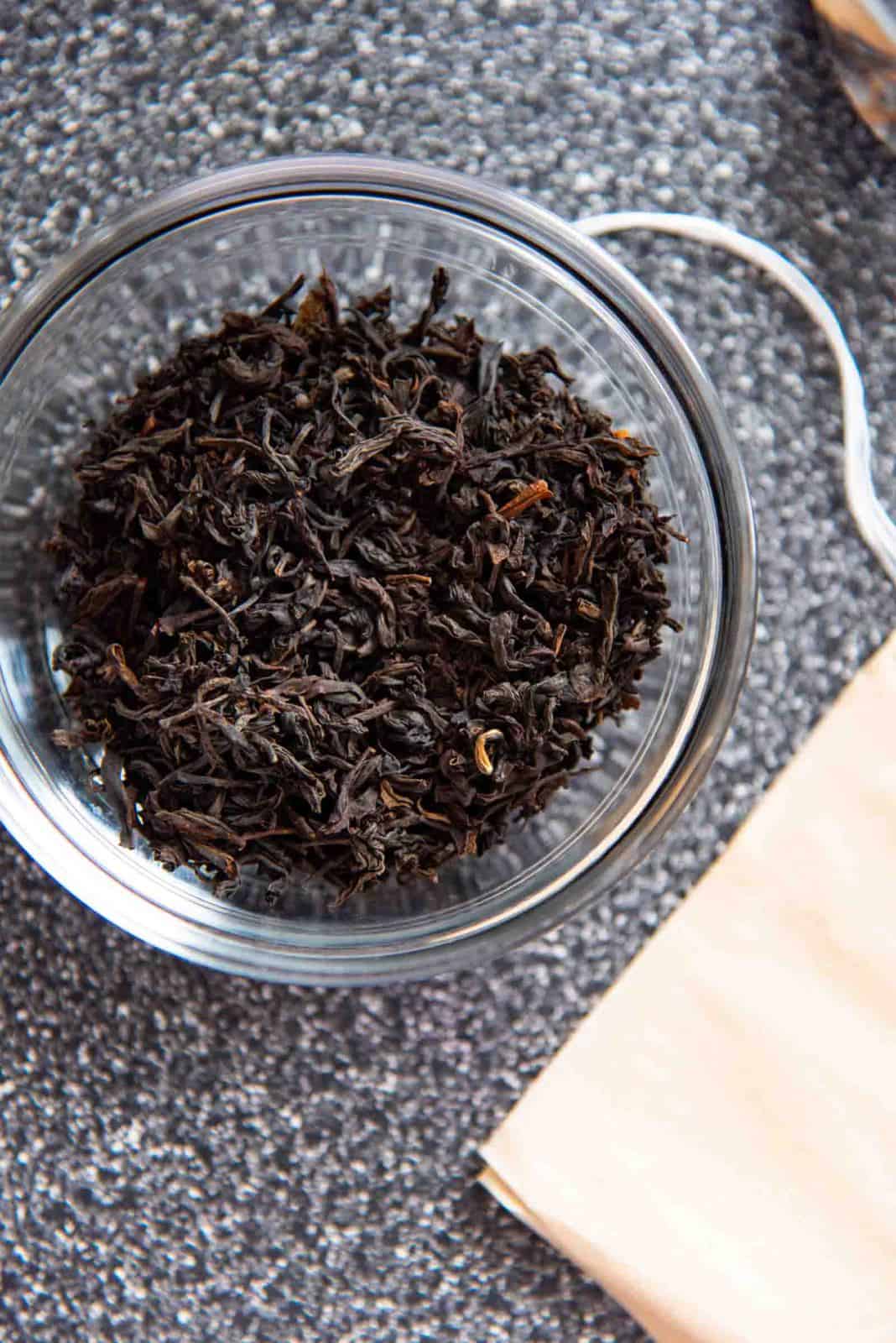
Ceylon tea is synonymous with black tea. But there are other types as well. This type of tea has been oxidized the most, and has the strongest flavor as well.
Black tea is graded even further into different categories, depending on the size and “age” of the tea shoots that are used to make the tea.
- Orange pekoe (OP) – The benchmark for high grade tea. Whole tea leaves (bud and/or first leaf) dried, and they stay intact and whole. More expensive.
- Broken orange pekoe (BOP) – Orange pekoe leaves that break slightly during the process.
- Fannings or dust – Leftover tea leaves that remain AFTER OP and BOP tea leaves have been separated. Fannings are small pieces and dust is a mix of small pieces and dust-like tea. Considered the lowest grade, but also the most popular as most tea bags contain fannings or dust tea.
- Powdered – Powdered black tea is a newer item in the market. It’s the black tea version of matcha powder, and great to make mixed tea based drinks.
Ceylon tea vs Assam tea
Tea gets classifications based on the regions it’s grown in. India has several well known tea types such as Assam or Darjeeling.
As a much smaller country, all tea from Sri Lanka is classified as Ceylon tea. (However, Ceylon tea is also sub-categorized based on the elevation at which it’s grown. I.e. central hill country vs low-lying areas.)
- Assam tea – Assam tea is a robust black tea that originates from the Northeastern region of India – Assam. Due to the climate of this region, tea plants develop a full, robust flavor that results in a bold, malty, brisk taste.
- Ceylon tea – Tea grown at higher elevations and the cooler climate of Nuwara Eliya produces tea that is strong and bright with citrusy notes. Teas grown at lower elevations in hotter weather produce a more full flavored tea with malty notes (similar to Assam tea).
- Breakfast tea – Popular black tea that is in demand in Britain. Usually breakfast tea is a blend of Indian teas like Assam and Ceylon tea (higher altitude tea), so that it provides a balance of flavors.
Black tea vs milk tea
- Black tea or plain tea – When tea is served without milk or dairy, it’s said to be served “black”, much like black coffee. Having said that, black tea has a beautiful dark amber color in light and isn’t black at all. You can enjoy all types of black tea as plain tea, and the type of tea and brewing time play a big part in the final flavor profile.
- Milk tea – This is tea with milk or dairy added to it. If the tea isn’t strong enough, the flavor of milk overpowers the tea – not good. So, it’s important to use a strong flavored tea that’s brewed well to make milk tea. You can add milk or cream. My favorite though is milk powder (which I actually love to add to bread and dough recipes as well like milk bread , New England hot dog buns , Hawaiian rolls etc.)
- Ceylon tea from Nuwara Eliya has a strong flavor that can withstand the addition of milk, but can also be enjoyed WITHOUT milk, because it has lovely citrusy, floral notes when steeped for a shorter time.
Both Ceylon and Assam tea have strong flavors and are perfect as breakfast teas, especially with milk. I always have both in my pantry, and use them interchangeably to make tea for ourselves.
Tea bags vs loose leaf

Tea is either served as loose leaves or in tea bags . Usually, fannings and dust are served as tea bags at a lower price point, and OP and BOP (whole leaf dried) tea is served as loose leaf tea at a higher price point.
However, now you can purchase OP and BOP in tea bags as well (high end silk like tea bags), and fannings are also available as loose leaf tea. In fact, in Sri Lanka, people generally only have access to the lower grade fannings and dust in loose leaf form (while the higher grade tea is exclusively for exporting).
Because loose leaf is larger, you can steep it longer to get more flavor without over-extracting undesirable flavors.
Tea bags usually contain tea fannings and dust that remain after the higher grade tea is separated from the final product. Since these are the remnants of higher grade tea, these fannings and dust still originate from the same tea leaves, but are more affordable, widely available, and more popular.
But, because they are smaller particles, they brew faster and release their flavors faster as well. So, there’s also a higher likelihood of over-extracting bitter compounds if brewed for too long.
The keys to making the perfect cup of black tea
Choosing the right tea
A strong flavored black tea is crucial for a good cup of tea! But you don’t need to spend big bucks on the highest grades of tea either.
We use tea fannings from BOP tea. It’s cheaper with the same depth of flavor. Choose a well known brand that certifies the originating country. My parents love the Sri Lankan brand Dilmah.
- For milk tea – I like to use a strong black tea like Ceylon tea or Assam tea.
- For black tea with no milk – You can use Ceylon tea for plain tea / black tea as well, but Darjeeling tea is also great as it has a light, fruity flavor that stands out in a black tea.

Tea brands that I like
Growing up in New Zealand, the best tea brand we could find in the supermarket was Dilmah . My parents still enjoy drinking Dilmah gold standard or extra strength .
However, if someone we knew travels to Sri Lanka, we often ask them to bring back tea for us! It’s hard to go wrong, because most brands there are excellent! For some reason, even Lipton tea in Sri Lanka is so much better than Lipton tea available in the US. We currently use St. Claire’s BOPF tea from Sri Lanka.
You can also go to a South Asian grocery store and ask them for advice too. More often than not, they will direct you to their favorite brand that they use at home.
Twinings brand – Can find it in the supermarket.
Red rose brand – Can find it in the supermarket.
Higher end teas that are worth it,
- Murchies teas – Canadian company
- Pluck tea – Canadian company
- Tealrya – Canadian company
- Ahmad tea – US company
- Vadham tea – US company
Choosing the steeping method

Steeping method
- Tea bags make the process SO easy! But if you’re using loose tea (fannings or whole leaves), then you can also easily find ways to steep the tea.
- Disposable paper filter bags
- Reuseable cloth tea bags
- Reusable metal / silicone infusers
- If using loose leaf tea, you can also just place the tea directly in the tea pot and pour the tea through a strainer.
Simmer method – Or if you’re making milk tea, you can simmer the tea on the stovetop instead of steeping it.
Water
Water is such a crucial ingredient for making tea. A lot of online resources will recommend using filtered water or spring water or distilled water (or double distilled water) to make tea. I think that’s a lot of baloney.
Personally, I only have one rule. Use any drinkable water – except hard water . Hard water has an odd taste because of the higher levels of minerals in it, which will definitely affect the final flavor of the tea.
Using filtered water is only necessary if your water has an off taste, or isn’t potable. Otherwise, using potable tap water, OR boiled and cooled water is perfectly fine for regular tea drinkers!
Temperature and time
For hot tea, the temperature and time are crucial as well. Heated water will help shorten the infusion time and draw out the flavors from the tea leaves. Too much heat and too much time can over-extract flavor compounds such as tannins and lead to a bitter tea.
Plain tea
There’s only one way to get the best flavor from tea if you want to enjoy plain tea (black tea without milk). That is to steep the tea in water that’s heated to about 95 C / 203 F, for about 3 minutes . If you heat the water to boiling (100 C / 212 F), then you’ll need to let the water cool down slightly before steeping the tea.
With large leaf tea (OP or BOP), you can let it steep up to 5 minutes, but tea fannings only need about 3 minutes.
Milk tea
While I grew up being told to NEVER boil tea, I think making milk tea is the exception.
In our household, we steeped double the amount of tea in hot water for a longer time to get the desired stronger black tea, before making milk tea. Other households will simmer tea bags in water (and milk), to get a stronger tasting tea.
Both techniques are fine, and it comes down to preference. The key is that milk tea requires a much stronger tasting brewed tea before adding milk.
What you’ll need to make tea
Ingredients
- Black tea – You can use large leaf tea or fannings. Look for a certification of the origin. I prefer to use Assam tea or a certified Ceylon tea. If you’re new to tea-making, look for my recommendations above. If you already know what you like, then go with that!
- Hot water – We have a temperature-controlled kettle that we use. But you can also just use a regular kettle to boil water and let it cool down slightly before making tea.
- Sugar – For sweetening the tea.
- Milk – If making milk tea. You can add regular milk, but a milk tea ideally has a milky look and taste to it! Since milk powder is cheaper, we always used milk powder – and it ended up tasting the best! So now, I can’t really enjoy my milk tea any other way! But you can use half and half (10% fat content), table cream (18%), or even a splash of heavy cream (35%).
Equipment
- Cups (and saucers) – If you’re serving guests with tea, then glass / porcelain tea cups are preferred. Coffee cups like cappuccino cups also work. But if you’re making tea for yourself, then just use your favorite mug!
My irrational take on drinking vessels – My preference is to ALWAYS make tea in a white, light colored, or clear cup or mug. I don’t know why, there’s no logic to it that I’m aware of, but the tea always tastes off when I make it in a dark colored vessel!
- Kettle or pot – To heat water. You don’t have to have a precise temperature controlled kettle. You can use a regular kettle or even a pot to boil your water.
- Tea pot – You can make the tea in a tea pot, especially for larger batches (more than 2). The larger amount of water doesn’t cool down as fast and helps keep the tea warm for longer. There’s something delightful about pouring tea out of a tea pot when making a cup too. But you can just make it directly in your cup if you’re making a small batch.
- Tea infusers or disposable tea bags – If you’re using loose tea, then tea infusers or tea bags will help. You don’t need to strain the tea at the end, and it makes it easier to fish out the tea leaves after infusion.
How to make tea (step by step overview)
Step 1 – Warm the serveware and tea pot
This step is optional, but highly recommended if you want to maintain the temperature of the tea while serving it.
When serving tea to others, you want to keep the tea adequately hot when served. If hot tea is poured into cold cups, the tea will immediately start to cool down. So, I like to make sure the serving cups are nice and warm.
To do this, boil some water and pour the hot water into each cup and tea pot (images 1 – 2) . Then set aside as you make the tea. The hot water will keep the cups warm.

Step 2 – Get the ingredients ready
Choose the tea and amount you need for the number of servings. Large tea leaves (loose or tea bags) can be used if this is accessible to you. But tea fannings / dust also yield fabulous results!
1 tea bag contains about 3 g of tea.
- For black tea – Use 1 tea bag (3 g) per 200 – 240 mL of hot water.
- For milk tea – Use 2 tea bags (6 g) per 200 – 240 mL of hot water.
Loose tea can be placed in an infuser or disposable tea bag (image 3) . But tea bags can be used as is. Make sure there’s enough room in the infuser or tea bags for the leaves to expand. If the leaves don’t have room to expand as they absorb water, there’ll be uneven infusion.
If you’re using milk, you should ideally gently heat the milk, so that it doesn’t bring the temperature of the tea down before serving.
Heat the water for the tea as well. The water temperature should be at about 95 C / 203 F. Alternatively, boil the water and let it sit for a few minutes to cool down (to about 95 C / 203 F).
Step 3 – Steep the tea
Empty the warm water in the tea pot, and then place the tea bags / infuser inside the pot (image 4) . Then add the right amount of water into it. Roughly 200 – 240 mL (between 6.5 – 8 fl oz) per serving (image 5) .
Stir the water just for a few seconds to allow the tea leaves to saturate with water (image 6) . Then close the lid and let it steep (image 7) . You can stir it once during this time to help the tea evenly infuse in the water.
- For black tea – 2 – 3 minutes (depends on the brand – weaker teas may require 3 minutes, but better quality tea will taste great even after 2 minutes).
- For milk tea – 5 minutes. This is because you need a stronger tea with some astringency to hold up against the milk and still be able to taste the tea.
If you use fannings, the tea will infuse faster for a stronger tea cup, while there’s just a little more flexibility when using large leaf tea.

Step 4 – Strain the tea
Once the tea is infused, it’s ready to be served. Remove the tea bags from the tea pot. Don’t squeeze the water out of the tea bags, since this can make the tea bitter. Just a light squeeze so that it doesn’t drip everywhere is OK.
The tea for plain tea should have a lighter color (image 8) than the tea for milk tea (image 9) , because it will be a stronger, more concentrated tea.

- For black tea (plain tea) – Empty the warm water in the tea cups and pour the tea into the cups. Leave room to stir in sugar, and serve immediately (image 10) .
- For milk tea – I prefer using milk powder, because that’s how I always drank milk tea, growing up. Plus, milk powder allows me to add a lovely creaminess without diluting the strength of tea.

If using milk powder, add about 1 heaped teaspoon / 1 measured tablespoon into each serving cup along with any sugar (image 11) . Use just a little bit of hot tea to dissolve the milk powder into a thick smooth paste (in the same cup or different cup – same cup is easier of course) (image 12) .
This will make sure there are no milk lumps in the final tea. Then top with more tea (image 13) and stir to combine. You can also make milk tea in a separate jug and strain it into the serving cup as well (image 14) .

If using milk or cream – Make sure the milk or cream is warm as well. Empty the warm water in the tea cups. Pour the tea into the cups (image 15) , and leave room for milk / cream and sugar.
You can add up to 1/4 cup of cream to each cup along with sugar (image 16) . Stir to mix (image 17) . The amount will depend on whether you’re using milk or cream and how milky you want your tea to be.
Step 5 – Serve the tea
Serve immediately. You can add milk and sugar before serving, or serve them on the side so your guests can help themselves to it.
Fun fact – In Sri Lanka, it’s kind of a traditional sign of respect to serve the tea with a saucer, and teacup handle on the right side of the guest (left side of host or the one serving it). There’s a lot more tea etiquette involved that was passed down from the British, but that’s for another post!
You can sweeten the tea if you like. White sugar or brown sugar is the preference, but you can add honey as well. Sri Lankans also like to serve tea with a piece of jaggery (unrefined palm sugar) as the sweetener, instead of sugar.
Simmer method for milk tea
You can also simmer tea leaves with water and milk on the stove to make milk tea. Add water to a pot and bring it a boil with the lid ajar.
Reduce the heat to a simmer, and add the tea leaves. Stir it in to make sure the tea leaves are saturated, and then let the mixture simmer for about 3 – 4 minutes on low heat. Add the milk and simmer for a further 30 – 60 seconds. Strain and serve.
Best tips for making the perfect cup of tea
- Use good quality black tea . You don’t have to pay premium to get the best tea in the market. The easiest way is probably to go to a South Asian grocery store and get a tea brand that’s imported from India or Sri Lanka.
- A good Assam tea or Ceylon tea or Breakfast tea will work best for milk tea.
- Ceylon tea, Assam tea, or Breakfast tea also work for plain tea. Darjeeling is also a type of black tea that should be enjoyed without milk, as it has a more delicate flavor profile.
- Black tea is steeped for only 2 – 3 minutes . Milk tea is steeped for 5 minutes .
- When making black tea, larger tea leaves (OP or BOP) can be steeped for longer (3 minutes) . If you’re using tea fannings or CTC (crush, tear, curl) tea, then a shorter steeping time is better.
- Make sure the tea infuser has enough space after adding the tea leaves so that the leaves can expand as they absorb water. This is crucial for even infusion.
- Preheat the cups and tea pots before steeping tea. Preheated cups will maintain the tea temperature even after you serve the tea.
- Do NOT add milk to your hot water while the tea is still steeping . It immediately lowers the temperature of the water and interferes with the strength and flavor of the tea.
- The richer the milk or cream – the less of it you’ll need to get good flavor. Adding single or half and half cream is preferable to adding milk.
- My favorite way to add milk when making milk tea is to use instant milk powder .
- White sugar is the best to sweeten tea , since white sugar doesn’t add any extra flavor. However, you can substitute white sugar with a sweetener of your choice too. Brown sugar, honey, or sugar substitutes will work.

Serving suggestions
Black tea or plain tea
Very versatile and you can serve it in many ways.
- With or without sugar
- With a piece of jaggery (unrefined molassey sugar)
- A drizzle of honey
- A squeeze or lemon or lime
- With a slice of ginger
Milk tea
- With or without sugar
- A piece of jaggery
- With a slice of ginger or cinnamon
Other snacks to serve with tea
Check out my full archive of tea time snacks !
From cream scones , strawberry shortcake , pound cake , butter cake , melting moments cookies and shortbread cookies to vegetarian rainbow sandwiches , chicken hand pies , chicken puffs etc., I’ve got tons of ideas for savory appetizers and sweet treats that you can serve with tea.

Why is my tea bitter?
When tea is over extracted, it pulls compounds that make the tea bitter. Tannins are one of those compounds, and just like in wine, it adds astringency to tea. Too much of it will certainly make the tea taste bitter. Poor quality teas can also release more of these compounds. To reduce the bitterness, reduce the steeping time of the tea. For a stronger flavor, use more tea, while reducing the steeping time. Alternatively, adding milk to the tea can also cut through and reduce the bitterness.
Can I make tea in the microwave?
Please don’t! Technically, you can boil water in the microwave. But then you risk superheating the water, where the water can explode and splatter everywhere once you take it out of the microwave. Superheated water will absolutely burn your tea leaves and make it very unpleasant to drink, and it can also be very dangerous. Even if you don’t boil it, it’s really difficult to homogenously heat water in the microwave. If you don’t have a kettle, you can heat water in a small pot on the stove instead. If you have to use a microwave, please take care not to overheat the water, and let it cool down before adding tea.
How do I know if I’m using the correct amount of tea?
The best way to know is by trial and error. The standard for a cup of tea is 3 – 5 g of tea. I would add a minimum of 6 g per cup of tea for a milk tea. Tea bags come pre-prepared which makes it easy for us, but loose tea is a little tricky. 1 teaspoon of tea fannings will weigh more than 1 teaspoon of large loose tea leaves, so the most accurate way to know how much tea you use is a scale. But you can also use a teaspoon and find that sweet spot for you.
How much caffeine is in tea?
This depends on the type of tea. Black tea has the highest amount of caffeine, while green tea and white tea have the least amount. 1 g of black tea can contain about 15 – 30 g of caffeine, so 1 cup can contain between 40 – 70 mg of caffeine. However, you can purchase decaf black tea as well.
So who’s ready to raise that pinky and sip on some hot tea now?
Recipe
How To Make Tea (Black Tea & Milk Tea)
Equipment
- Kettle
- Tea infuser or disposable tea bags
- 2 cups, to serve
- Tea pot
- Strainer
- Small jug (optional - for milk tea)
Ingredients
Black tea / plain tea (for2servings)
- 2 bags black tea (Assam or Ceylon tea) 6 g / 4 tsp BOP tea / 3 tsp fannings tea (see recipe notes)
Milk tea (for2servings)
- 4 bags black tea (Assam or Ceylon tea) 12 g / 8 tsp BOP tea / 6 tsp fannings tea (see recipe notes)
Other ingredients
- 480 mL water 2 cups, heated to 95°C / 203°F (see recipe notes)
- Water (optional) enough water to pre-warm the tea pot and tea cups
- ½ cup pouring cream / half and half or full-fat milk
- 2 tbsp instant milk powder (instead of cream / milk)
- Sugar to taste
Instructions
Warming the tea pot and cups
- Bring enough water to a boil and pour the water into the serving cups and tea pot until almost full. Set aside until you get the tea ready (this is to pre-warm the tea serveware).
Making the tea (for2servings)
- Choose Assam tea, Ceylon tea, or a Breakfast tea, and set aside 2 bags for black tea, and 3 - 4 bags for milk tea. If using loose leaf tea, measure the amount you will need. 2 bags black tea (Assam or Ceylon tea), 4 bags black tea (Assam or Ceylon tea)
- Place the loose leaf tea in the tea infuser or disposable / reusable tea bags. Make sure there is plenty of room in the bags / infusers for the tea leaves to expand.
- Heat room temperature water to 95°C / 203°F. If you don’t have a temperature controlled kettle, heat the water to a boil and then let it cool down for about 2 - 3 minutes to bring the temperature down slightly to about 95°C. 480 mL water
- Empty the water in the tea pot, and place the tea bags / infuser in the tea pot.
- Pour 480 mL / 2 cups of the hot water into the tea pot and gently stir for a few seconds. Place the lid and let the tea steep.
- About 2 - 3 minutes for black tea (plain milk). About 5 minutes for milk tea.
- You can either remove the tea bags and set them aside, OR immediately pour the tea into the prewarmed cups to serve as well.
Black tea (for2servings)
- After steeping the tea for 2 - 3 minutes, the tea is ready to be served. Empty the water in the serving cups.
- Pour the tea into the cups and add sugar to desired sweetness. Stir to dissolve and serve. Sugar
Milk tea (for2servings)
- While the tea is steeping, warm the milk in a pot or in the microwave. It shouldn’t be boiling, but fairly warm. ½ cup pouring cream / half and half
- After letting the tea steep for about 5 minutes, the tea is ready to be served.
- Empty the water in the serving cups.
- Milk tea with cream / milk - Pour the tea into the cups, but leave room for the cream. Pour the cream into the tea, about 2 - 3 tbsp of cream is my preference. But if you’re using milk, you may need to add more. Add sugar and stir to dissolve. ½ cup pouring cream / half and half, Sugar
- Milk tea with milk powder - Alternatively, you can also place 1 tbsp of milk powder directly in each of the serving cups or 2 tbsp into a separate jug with sugar (if using). Then pour just a little of the hot tea and stir the milk powder vigorously to dissolve (this is so that there are no milk powder lumps in the final tea). Top with more tea and strain into the serving cups. 2 tbsp instant milk powder, Sugar
- Serve immediately.
Notes
Making milk tea on the stovetop
Note about tea and amounts
Note about water
Nutrition
Recipe from The Flavor Bender by Dini Kodippili
How To Make Tea (Black Tea & Milk Tea) https://www.theflavorbender.com/how-to-make-black-tea-milk/
