
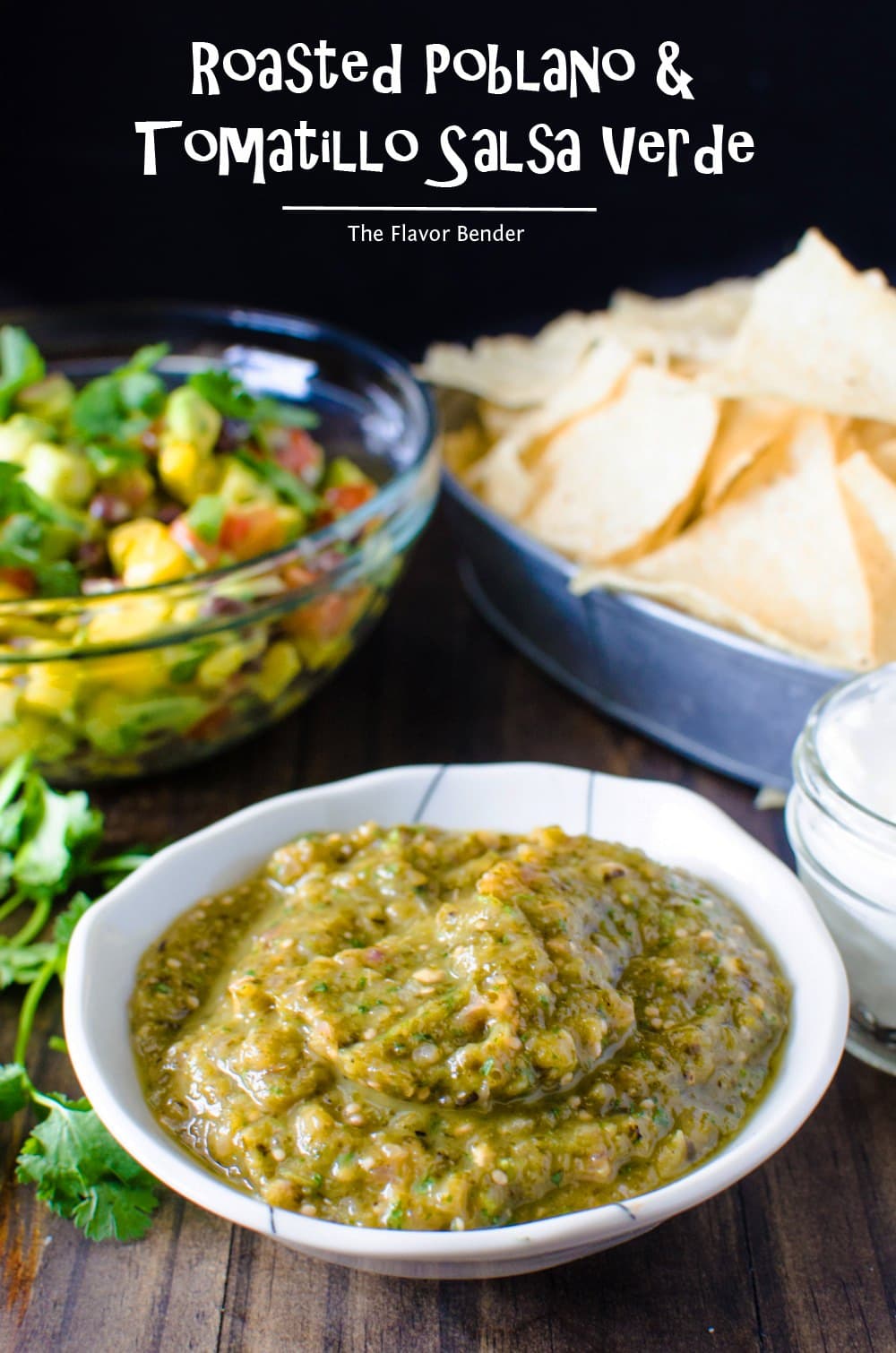
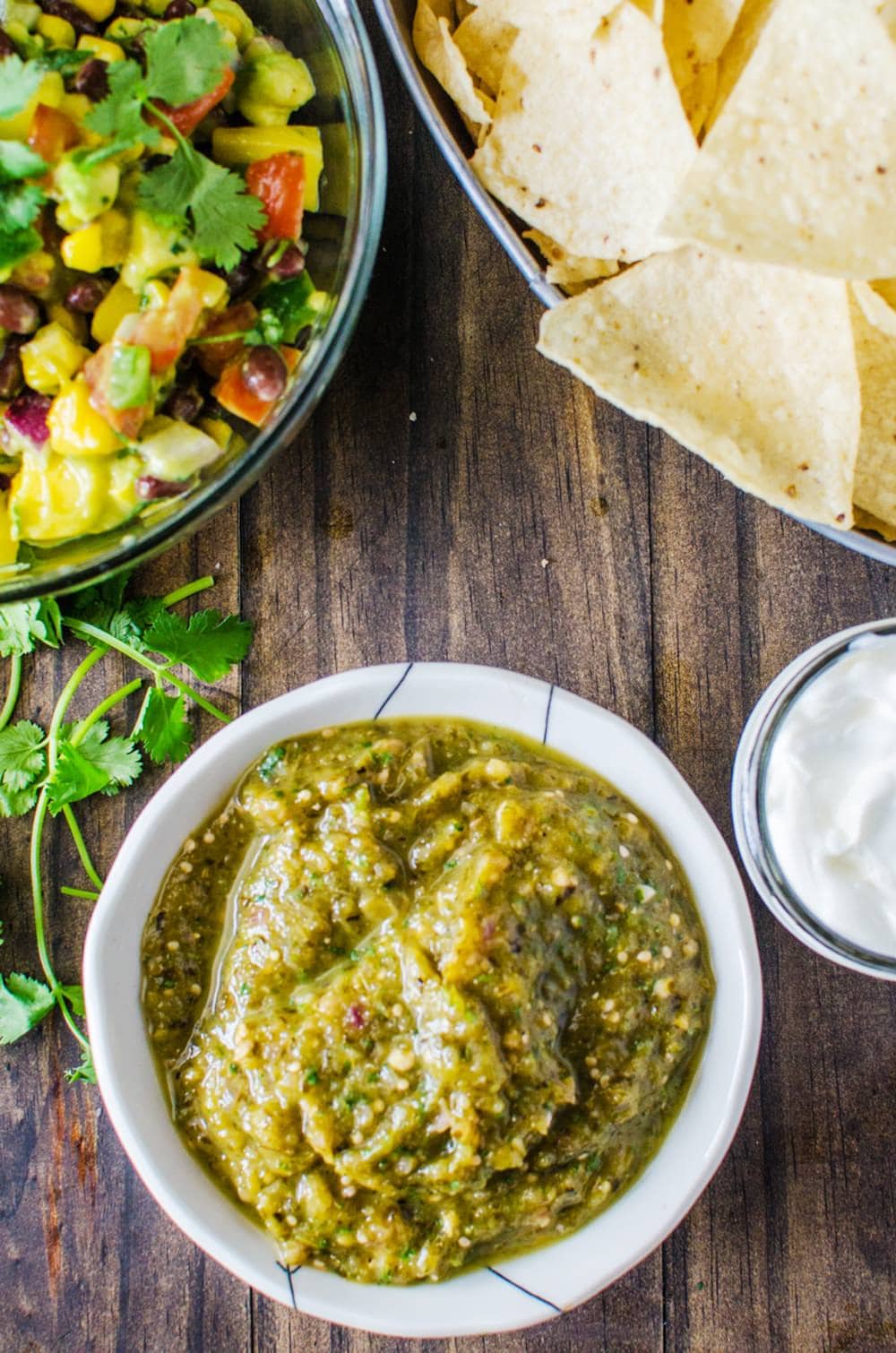
Learn how to make easy Roasted Tomatillo Salsa Verde , packed with so much flavor! Perfect with corn chips, enchiladas, tacos and more. With this homemade recipe, you’ll never want store-bought salsa verde again!
This is the best tomatillo salsa verde recipe, thanks to the flavor from charred and roasted tomatillos, poblanos and jalapenos!
- Why I love this recipe
- Ingredients How to choose tomatillos
- How to make oven roasted tomatillo salsa verde
- Can I can this salsa verde recipe
- Storage instructions Freshly made salsa verde storage Canned salsa verde storage
- Recipes to use with this salsa verde
This is by far one of my favorite dips to eat with corn chips. Once I started making my own homemade salsa verde, I did NOT want anything to do with store-bought salsa verde ever again.
Thanks to the simple cooking technique of oven roasting or charring (just as I do with my roasted Hatch chile , another favorite of mine!), this spicy roasted tomatillo salsa has so much flavor. Even better, it’s super simple to make.
Why I love this recipe
- I share how to make this easy roasted salsa verde recipe step by step.
- I also share how to adjust for a roasted tomatillo salsa verde canning recipe , which involves a few extra steps.
- Since we are roasting the tomatillos first, you don’t have to use tomatillos in their prime. You can use slightly overripe and slightly bruised tomatillos too. So it’s great to reduce food wastage.
- This recipe can be used as a dip, topping, or sauce.
- The nice char on the tomatillos adds more flavor.
- A super easy and authentic salsa verde recipe, made with oven roasted tomatillos.
Ingredients
- Tomatillos (also known as Mexican husk tomatoes)
- Poblano
- Jalapenos (you can deseed the jalapenos if you want to tone down the spiciness)
- Garlic
- Onion
- Cilantro (leaves and stems)
- Lime
- Cumin
- Salt
How to choose tomatillos
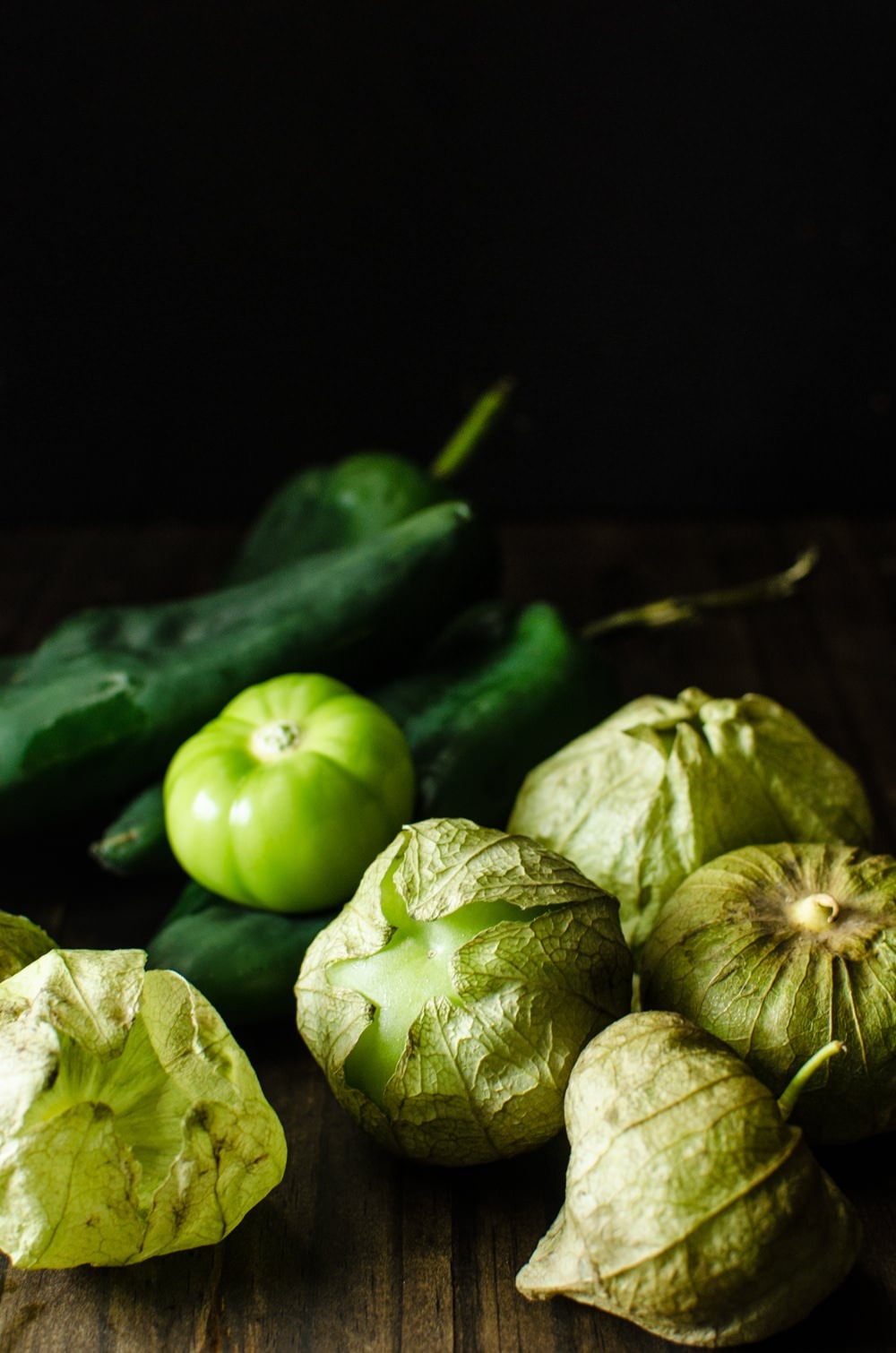
The most important ingredient in this recipe is of course tomatillos. Contrary to what they look like, these are NOT small, unripe tomatoes. Tomatillos have an identity of their own. They are small, bright green tomato-shaped fruits, that have a thin husk around them. They are more acidic and not as sweet as tomatoes. They are also more firm and dense than tomatoes.
While they can be eaten raw, and you can make raw tomatillo salsa, I find the raw salsa verde to be too tangy. By roasting the tomatillos, the acidity is less pronounced, and you get more flavor from the tomatillos as well. Plus, the added charring yields even more flavor to this spicy salsa verde.
For this recipe, I use green tomatillos. You can also find yellow and purple tomatillos in other parts of the world. But unfortunately, I only have access to green tomatillos.
If you’re using raw tomatillos to make salsa verde, you absolutely need to buy the best tomatillos you can find.
This includes,
- Beautiful bright green tomatillos,
- Firm to the touch,
- The husk should be tightly wrapped around the entire fruit (with only the bottom visible), and with no tearing.
- Skin that is lighter in spots and fruits that are soft can mean that the tomatillo is overripe.
Here’s the good news!
Since we are oven roasting these tomatillos for the salsa verde, we don’t need to purchase picture perfect fruits. It’s OK to have some light spots on the skin (i.e. overripe). It’s OK if the tomatillos are a little soft. And it’s absolutely OK if the husks are a little torn up, as long as the fruit inside still looks good.
So by making roasted tomatillo salsa, you can use up tomatillos that are a little old, or a little “ugly”, and still have a ridiculously delicious dip and sauce.
You don’t need to purchase the freshest tomatillos to make this homemade salsa verde! This is a great recipe to use up slightly overripe, “ugly produce” tomatillos.
How to make oven roasted tomatillo salsa verde
The first step is to prep the tomatillos. Remove the husks from the tomatillos and rinse them well in warm water to remove the sticky residue on the surface of the fruits.
Wash the poblano peppers and jalapeno peppers as well. Once rinsed, pat dry the tomatillos, poblano peppers and jalapenos. By drying them, it’ll be easier to get a nice char on them.
I like making spicy tomatillo salsa, so I keep the jalapeno seeds, but if you don’t like spicy – you can deseed the jalapenos.
Peel and slice the onion. You can simply halve it or quarter it too. Peel some garlic cloves and wrap them in foil. (Here’s my roasted garlic recipe .)
Line a baking tray with foil and place all the ingredients on the baking tray. Toss them with some oil and salt. Place the baking tray in the oven and roast the tomatillos until you get a nice char on the tomatillos and peppers.
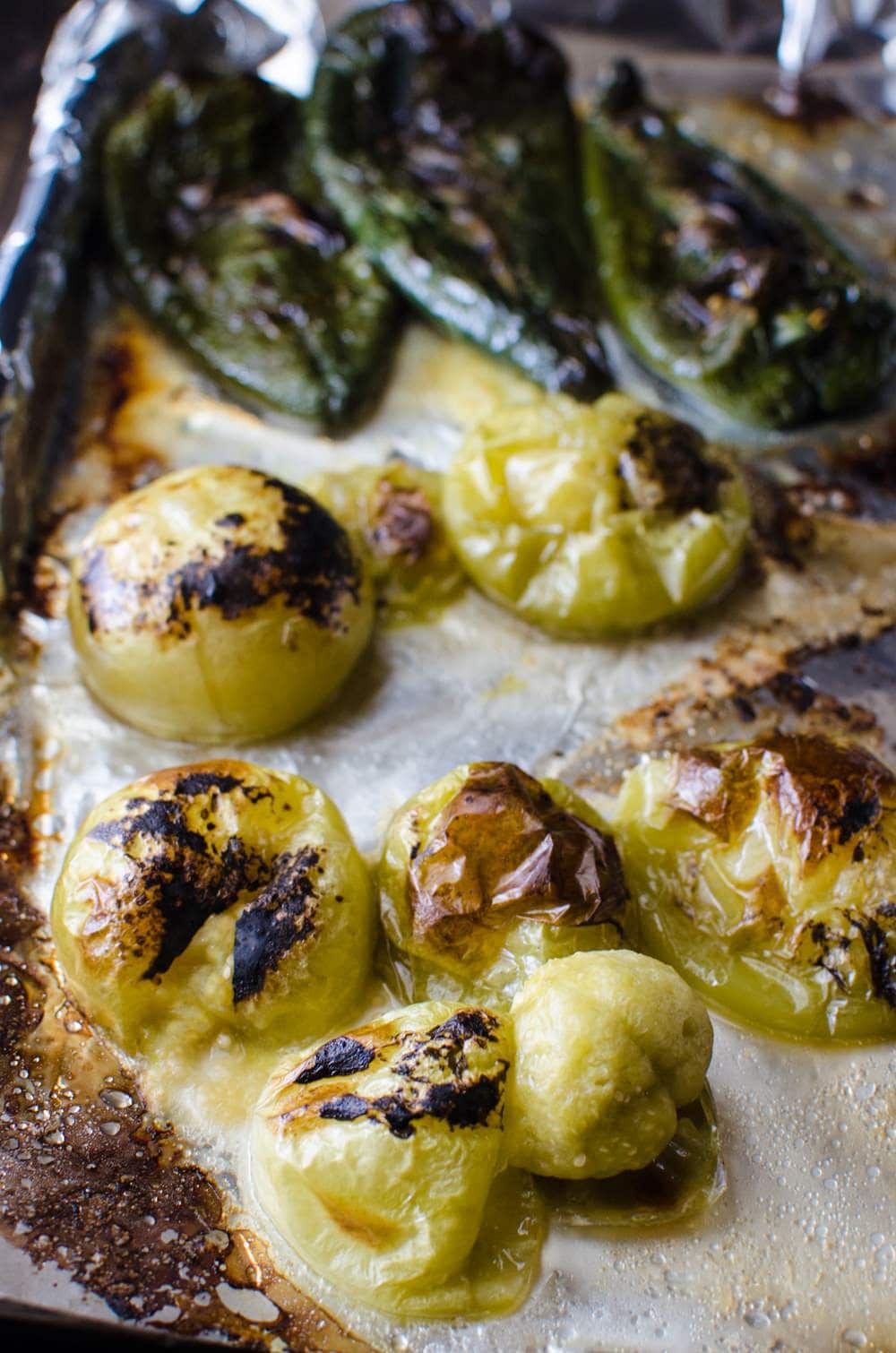
Roasted tomatillos and poblanos
When the tomatillos and all the other ingredients have a nice char on them and have softened, remove the tray from the oven and let it cool down a little.
Then, simply put all the ingredients in a food processor, along with some cilantro, cumin and salt, and pulse until you have a smooth oven roasted tomatillo salsa, made with charred tomatillos and peppers. All of that charring will add plenty of flavor!
Finally, add a little lime juice and more salt to taste and you end up with the best salsa verde you’ve ever made!
Can I can this salsa verde recipe
Yes, but you absolutely MUST add a little extra vinegar to make this safe to can . You cannot can this recipe as is. That’s because salsa isn’t acidic enough on its own to be canned safely.
To make canned roasted salsa verde, once you have added just a touch of lime juice to the recipe, you must add
- About 2 – 3 tbsp of white vinegar, OR
- 2 – 3 tbsp BOTTLED lime juice. This is the only time I recommend using bottled lime juice for a recipe, because it’s more acidic than fresh lime juice.
It’s best to use tomatillos that aren’t over-ripe, and are bright green and firm to make salsa verde for canning. I also recommend at least doubling this recipe, so that you have a larger amount to can.
Canning roasted salsa verde
Make sure that you use canning jars that have been designed for heating and sealing. Ball canning jars are excellent
Make the salsa verde according to the recipe, but transfer the salsa into a medium pot and add the vinegar or bottled lime juice. Bring it to a boil and let it simmer for about 10 – 15 minutes, stirring frequently.
Place the jars in a canning rack to prevent the jars from touching the bottom of the pot. Preheat the jars in simmering water (180 F/83 C). Drain the water and place the jars on a flat surface.
Transfer the hot, roasted tomatillo salsa verde into the jars, making sure there is a 0.5 inch gap between the salsa and the lid. Tap the jars to get rid of any air bubbles in the salsa.
Wipe the rims with a clean damp cloth, as there should not be any salsa on the lips of the jars.
Close the lids until finger-tip tight. The Ball jars usually come with a lid and the ring.
Place the jars in the canning pot, with water 1 – 2 inches over the top of the jar. Bring the water to a rolling boil over medium heat, and let the jars sit for 15 – 20 minutes.
Then switch off the heat and allow the roasted salsa bottle rest in the water for 5 minutes.
Finally, remove the jars from the canning pot and let them rest on a flat surface for 12 – 24 hours. Check for the pop on the lid to make sure the salsa is sealed properly.
To make a canned roasted tomatillos salsa verde recipe, you need to use firm tomatillos and add extra acidity to make sure it preserves well. Also processing the recipe with appropriate canning equipment will ensure that it lasts longer.
Storage instructions
Storage instructions will change depending on how you make the homemade roasted tomatillo salsa verde.
Freshly made salsa verde storage
This can be stored in the fridge for about 10 days. You can also freeze the salsa verde and keep it frozen for up to 3 months.
Canned salsa verde storage
If the canning worked (pop test on the lid), then you can place them in a dark and cool place for about 12 months. Once opened, it must be consumed within 10 days and be refrigerated.
Recipes to use with this salsa verde
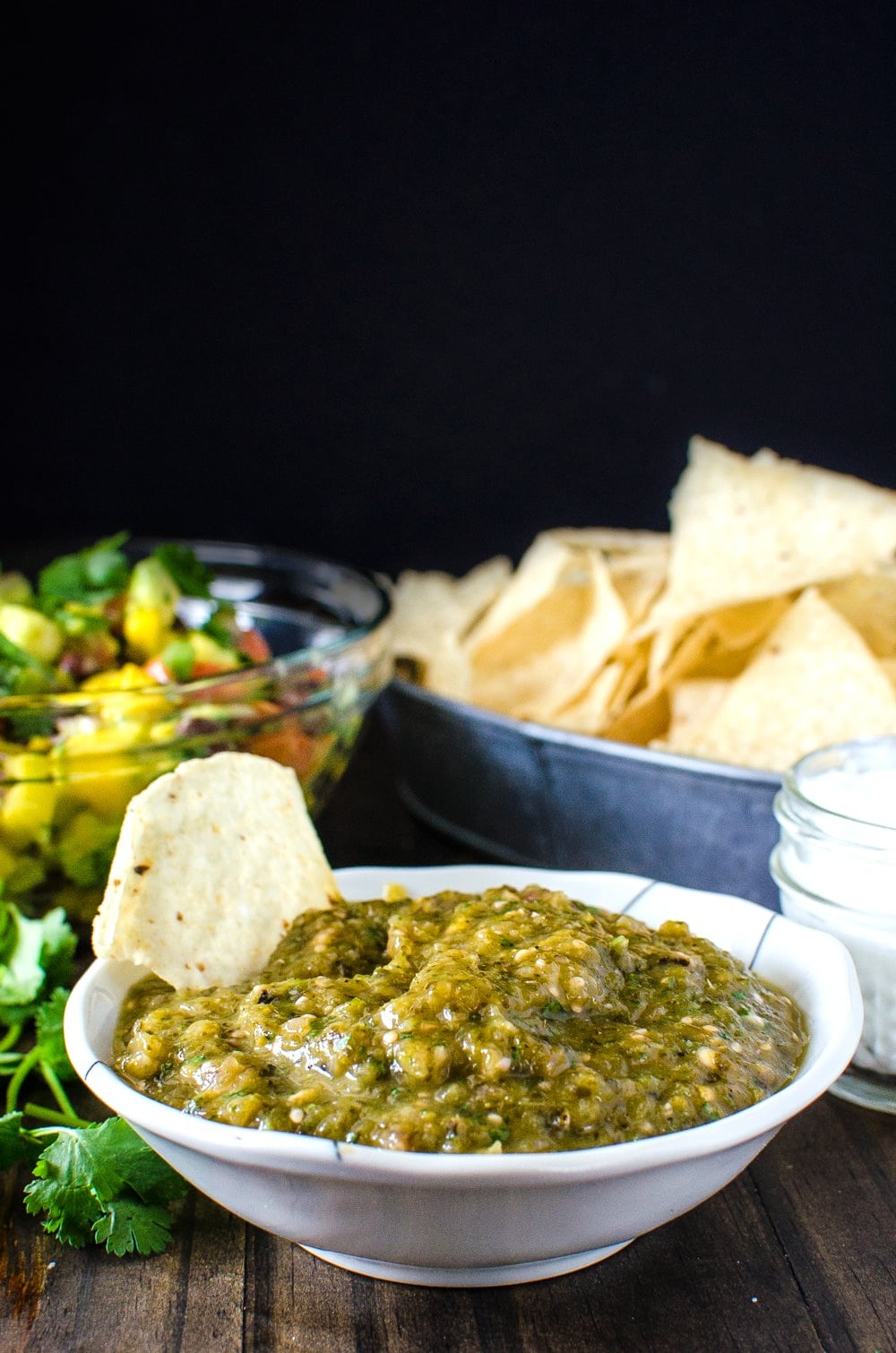
- As a dip for corn chips or regular potato chips.
- As a topping for tacos (like these pork carnitas tacos or roasted pork tacos ), nachos or rice bowls.
- You can also use this roasted salsa verde to make green enchilada sauce by adding some chicken broth or carnita broth (like I do in this pork carnitas recipe ) to thin it out.
- You can also add this salsa verde to chicken or pork while cooking to make green chile chicken or pork!
- Add it to soup to make green chile chicken soup or even a stew.
Recipe
Easy Roasted Tomatillo Salsa Verde
Ingredients
- 455 g tomatillos 1 lb, about 8 - 9 medium-sized tomatillos (see recipe notes)
- 3 poblanos
- 2 jalapenos for an extra spicy kick
- 1 medium red onion cut into quarters / wedges or thick slices. Yellow or vidalia onion can also be used
- vegetable oil
- 4 garlic cloves
- ¼ tsp ground cumin
- Handful of cilantro leaves and stems
- 1 lime you may not need to use the whole lime
- ½ tsp sugar
- 2 tbsp white vinegar only if you’re canning the recipe
- Salt to taste
Instructions
Roasted Tomatillo Salsa Verde (makes about1½cups)
- Remove the husks from the tomatillos and wash them in warm water to remove the sticky residue. Also wash the poblano and jalapeno peppers. 455 g tomatillos, 3 poblanos, 2 jalapenos
- Place the tomatillos and peppers on a napkin and pat dry.
- Peel and cut the onion into quarters. 1 medium red onion
- Preheat the oven to 450 °F / 232°C. Line a baking sheet with non-stick foil and brush it with some oil.
- Place the tomatillos, poblano peppers, jalapenos, and onion on the lined baking sheet. Drizzle some oil on top and a generous sprinkling of salt and toss to mix and coat evenly. 455 g tomatillos, 3 poblanos, 2 jalapenos, 1 medium red onion, vegetable oil, Salt to taste
- Wrap oil-coated garlic cloves in a small piece of foil and place it on the baking sheet as well. 4 garlic cloves
- Roast the tomatillos in the oven for about 20 - 25 minutes, flipping them once half way through. The time is a guideline - the tomatillos and peppers should be roasted until there is a nice char on them, and are softened.
- Remove the baking sheet from the oven and let it cool.
- Remove the stems from the poblano and jalapeno peppers (de-seed the jalapeno peppers if you prefer a mild salsa verde). Unwrap the softened garlic cloves from the foil and let them cool.
- OPTIONAL - Remove the skins if you like (I don’t do this).
- Place the roasted tomatillos, poblano, jalapeno, garlic, onion, cumin, cilantro, sugar and juice of ½ lime in a food processor. ¼ tsp ground cumin, Handful of cilantro, ½ tsp sugar, 1 lime
- Pulse until everything is evenly chopped. Taste and add more lime juice if needed, and season with salt. Pour the salsa into an air-tight container or glass jar and store in the fridge until needed. 1 lime, Salt to taste
- Pour into a serving dish and serve.
OPTIONAL - For canning salsa verde (preferably, double the recipe)
- Once the salsa verde is processed in the food processor, transfer the salsa into a pot.
- Stir in the white vinegar and bring the salsa verde to a boil over medium-high heat. Lower the heat and let it simmer for about 10 - 15 minutes, stirring frequently. 2 tbsp white vinegar
- Place the canning jars in a canning rack and submerge them in the water in your canning pot. Simmer the water at 180°F / 83°C to preheat the jars.
- Pour the hot salsa into the warmed canning jars, leaving ½ inch gap between the salsa and the lid. Gently tap the jars on the counter to remove any trapped air bubbles.
- Wipe the rims of the jars with a damp, clean cloth to remove any salsa.
- Close the jars with the lids until finger-tip tight.
- Place the jars in the canning pot and fill with water, until there’s 1 - 2 inches of water above the lid. Bring the water to a boil over medium heat, and let the water gently boil for about 15 - 20 minutes.
- Turn off the heat and let the jars sit in the water for about 5 minutes before removing them from the water. Rest the jars for a further 12 - 24 hours at room temperature.
- Test the lids to see if they have sealed properly. If properly sealed, they can be stored in a cool, dark place for up to 12 months.
Notes
Choosing tomatillos
Tips for canning
Storage
Nutrition
Recipe from The Flavor Bender by Dini Kodippili
Easy Roasted Tomatillo Salsa Verde https://www.theflavorbender.com/roasted-poblano-tomatillo-salsa-verde/
Learn how to make easy Roasted Tomatillo Salsa Verde , packed with so much flavor! Perfect with corn chips, enchiladas, tacos and more. With this homemade recipe, you’ll never want store-bought salsa verde again!
This is the best tomatillo salsa verde recipe, thanks to the flavor from charred and roasted tomatillos, poblanos and jalapenos!
- Why I love this recipe
- Ingredients How to choose tomatillos
- How to make oven roasted tomatillo salsa verde
- Can I can this salsa verde recipe
- Storage instructions Freshly made salsa verde storage Canned salsa verde storage
- Recipes to use with this salsa verde
This is by far one of my favorite dips to eat with corn chips. Once I started making my own homemade salsa verde, I did NOT want anything to do with store-bought salsa verde ever again.
Thanks to the simple cooking technique of oven roasting or charring (just as I do with my roasted Hatch chile , another favorite of mine!), this spicy roasted tomatillo salsa has so much flavor. Even better, it’s super simple to make.
Why I love this recipe
- I share how to make this easy roasted salsa verde recipe step by step.
- I also share how to adjust for a roasted tomatillo salsa verde canning recipe , which involves a few extra steps.
- Since we are roasting the tomatillos first, you don’t have to use tomatillos in their prime. You can use slightly overripe and slightly bruised tomatillos too. So it’s great to reduce food wastage.
- This recipe can be used as a dip, topping, or sauce.
- The nice char on the tomatillos adds more flavor.
- A super easy and authentic salsa verde recipe, made with oven roasted tomatillos.
Ingredients
- Tomatillos (also known as Mexican husk tomatoes)
- Poblano
- Jalapenos (you can deseed the jalapenos if you want to tone down the spiciness)
- Garlic
- Onion
- Cilantro (leaves and stems)
- Lime
- Cumin
- Salt
How to choose tomatillos
The most important ingredient in this recipe is of course tomatillos. Contrary to what they look like, these are NOT small, unripe tomatoes. Tomatillos have an identity of their own. They are small, bright green tomato-shaped fruits, that have a thin husk around them. They are more acidic and not as sweet as tomatoes. They are also more firm and dense than tomatoes.
While they can be eaten raw, and you can make raw tomatillo salsa, I find the raw salsa verde to be too tangy. By roasting the tomatillos, the acidity is less pronounced, and you get more flavor from the tomatillos as well. Plus, the added charring yields even more flavor to this spicy salsa verde.
For this recipe, I use green tomatillos. You can also find yellow and purple tomatillos in other parts of the world. But unfortunately, I only have access to green tomatillos.
If you’re using raw tomatillos to make salsa verde, you absolutely need to buy the best tomatillos you can find.
This includes,
- Beautiful bright green tomatillos,
- Firm to the touch,
- The husk should be tightly wrapped around the entire fruit (with only the bottom visible), and with no tearing.
- Skin that is lighter in spots and fruits that are soft can mean that the tomatillo is overripe.
Here’s the good news!
Since we are oven roasting these tomatillos for the salsa verde, we don’t need to purchase picture perfect fruits. It’s OK to have some light spots on the skin (i.e. overripe). It’s OK if the tomatillos are a little soft. And it’s absolutely OK if the husks are a little torn up, as long as the fruit inside still looks good.
So by making roasted tomatillo salsa, you can use up tomatillos that are a little old, or a little “ugly”, and still have a ridiculously delicious dip and sauce.
You don’t need to purchase the freshest tomatillos to make this homemade salsa verde! This is a great recipe to use up slightly overripe, “ugly produce” tomatillos.
How to make oven roasted tomatillo salsa verde
The first step is to prep the tomatillos. Remove the husks from the tomatillos and rinse them well in warm water to remove the sticky residue on the surface of the fruits.
Wash the poblano peppers and jalapeno peppers as well. Once rinsed, pat dry the tomatillos, poblano peppers and jalapenos. By drying them, it’ll be easier to get a nice char on them.
I like making spicy tomatillo salsa, so I keep the jalapeno seeds, but if you don’t like spicy – you can deseed the jalapenos.
Peel and slice the onion. You can simply halve it or quarter it too. Peel some garlic cloves and wrap them in foil. (Here’s my roasted garlic recipe .)
Line a baking tray with foil and place all the ingredients on the baking tray. Toss them with some oil and salt. Place the baking tray in the oven and roast the tomatillos until you get a nice char on the tomatillos and peppers.
Roasted tomatillos and poblanos
When the tomatillos and all the other ingredients have a nice char on them and have softened, remove the tray from the oven and let it cool down a little.
Then, simply put all the ingredients in a food processor, along with some cilantro, cumin and salt, and pulse until you have a smooth oven roasted tomatillo salsa, made with charred tomatillos and peppers. All of that charring will add plenty of flavor!
Finally, add a little lime juice and more salt to taste and you end up with the best salsa verde you’ve ever made!
Can I can this salsa verde recipe
Yes, but you absolutely MUST add a little extra vinegar to make this safe to can . You cannot can this recipe as is. That’s because salsa isn’t acidic enough on its own to be canned safely.
To make canned roasted salsa verde, once you have added just a touch of lime juice to the recipe, you must add
- About 2 – 3 tbsp of white vinegar, OR
- 2 – 3 tbsp BOTTLED lime juice. This is the only time I recommend using bottled lime juice for a recipe, because it’s more acidic than fresh lime juice.
It’s best to use tomatillos that aren’t over-ripe, and are bright green and firm to make salsa verde for canning. I also recommend at least doubling this recipe, so that you have a larger amount to can.
Canning roasted salsa verde
Make sure that you use canning jars that have been designed for heating and sealing. Ball canning jars are excellent
Make the salsa verde according to the recipe, but transfer the salsa into a medium pot and add the vinegar or bottled lime juice. Bring it to a boil and let it simmer for about 10 – 15 minutes, stirring frequently.
Place the jars in a canning rack to prevent the jars from touching the bottom of the pot. Preheat the jars in simmering water (180 F/83 C). Drain the water and place the jars on a flat surface.
Transfer the hot, roasted tomatillo salsa verde into the jars, making sure there is a 0.5 inch gap between the salsa and the lid. Tap the jars to get rid of any air bubbles in the salsa.
Wipe the rims with a clean damp cloth, as there should not be any salsa on the lips of the jars.
Close the lids until finger-tip tight. The Ball jars usually come with a lid and the ring.
Place the jars in the canning pot, with water 1 – 2 inches over the top of the jar. Bring the water to a rolling boil over medium heat, and let the jars sit for 15 – 20 minutes.
Then switch off the heat and allow the roasted salsa bottle rest in the water for 5 minutes.
Finally, remove the jars from the canning pot and let them rest on a flat surface for 12 – 24 hours. Check for the pop on the lid to make sure the salsa is sealed properly.
To make a canned roasted tomatillos salsa verde recipe, you need to use firm tomatillos and add extra acidity to make sure it preserves well. Also processing the recipe with appropriate canning equipment will ensure that it lasts longer.
Storage instructions
Storage instructions will change depending on how you make the homemade roasted tomatillo salsa verde.
Freshly made salsa verde storage
This can be stored in the fridge for about 10 days. You can also freeze the salsa verde and keep it frozen for up to 3 months.
Canned salsa verde storage
If the canning worked (pop test on the lid), then you can place them in a dark and cool place for about 12 months. Once opened, it must be consumed within 10 days and be refrigerated.
Recipes to use with this salsa verde
- As a dip for corn chips or regular potato chips.
- As a topping for tacos (like these pork carnitas tacos or roasted pork tacos ), nachos or rice bowls.
- You can also use this roasted salsa verde to make green enchilada sauce by adding some chicken broth or carnita broth (like I do in this pork carnitas recipe ) to thin it out.
- You can also add this salsa verde to chicken or pork while cooking to make green chile chicken or pork!
- Add it to soup to make green chile chicken soup or even a stew.
